RIBA BRONZE MEDAL SHOWCASE: The Hotwells Dock Project
RIBA BRONZE MEDAL SHOWCASE: The Hotwells Dock Project
"Rivers are facing a severe existential environmental water quality crisis in the UK, 75% currently pose a serious risk to human health. This student has responded to this crisis with a project that explores the delicate balance between humans and their environment. It embodies making a difference through Architecture by giving hope in a seemingly hopeless spiral of destruction to our rivers."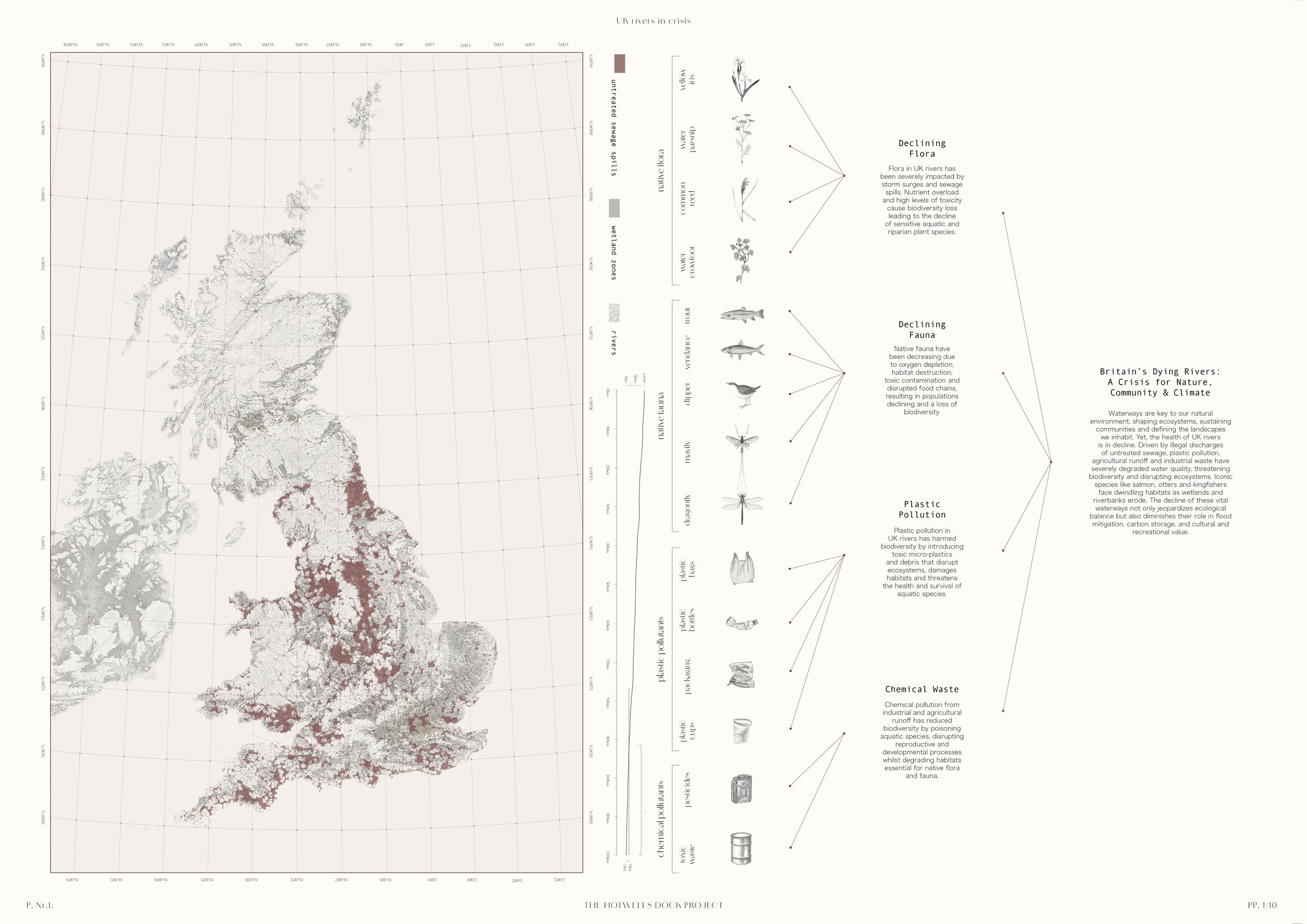
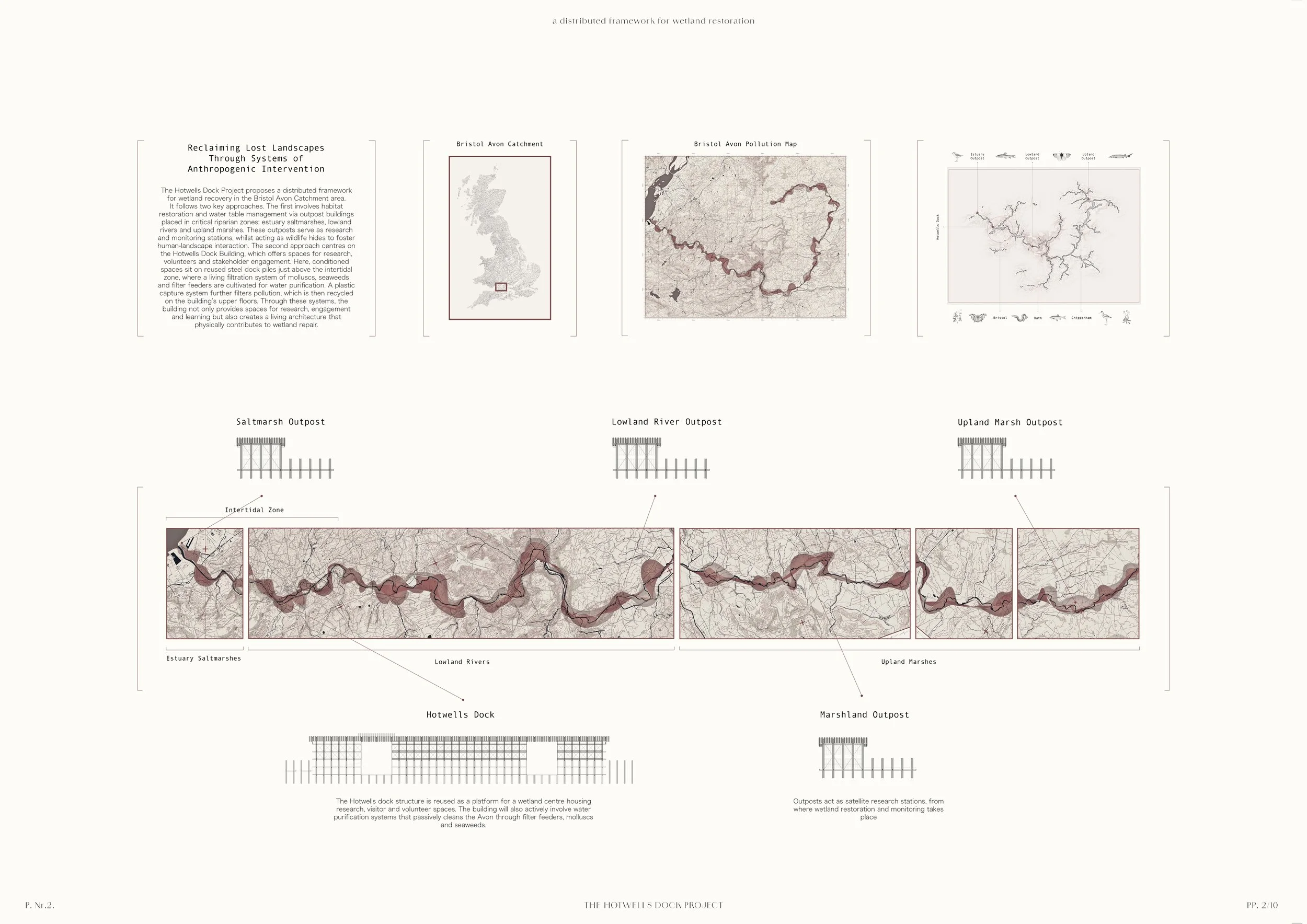


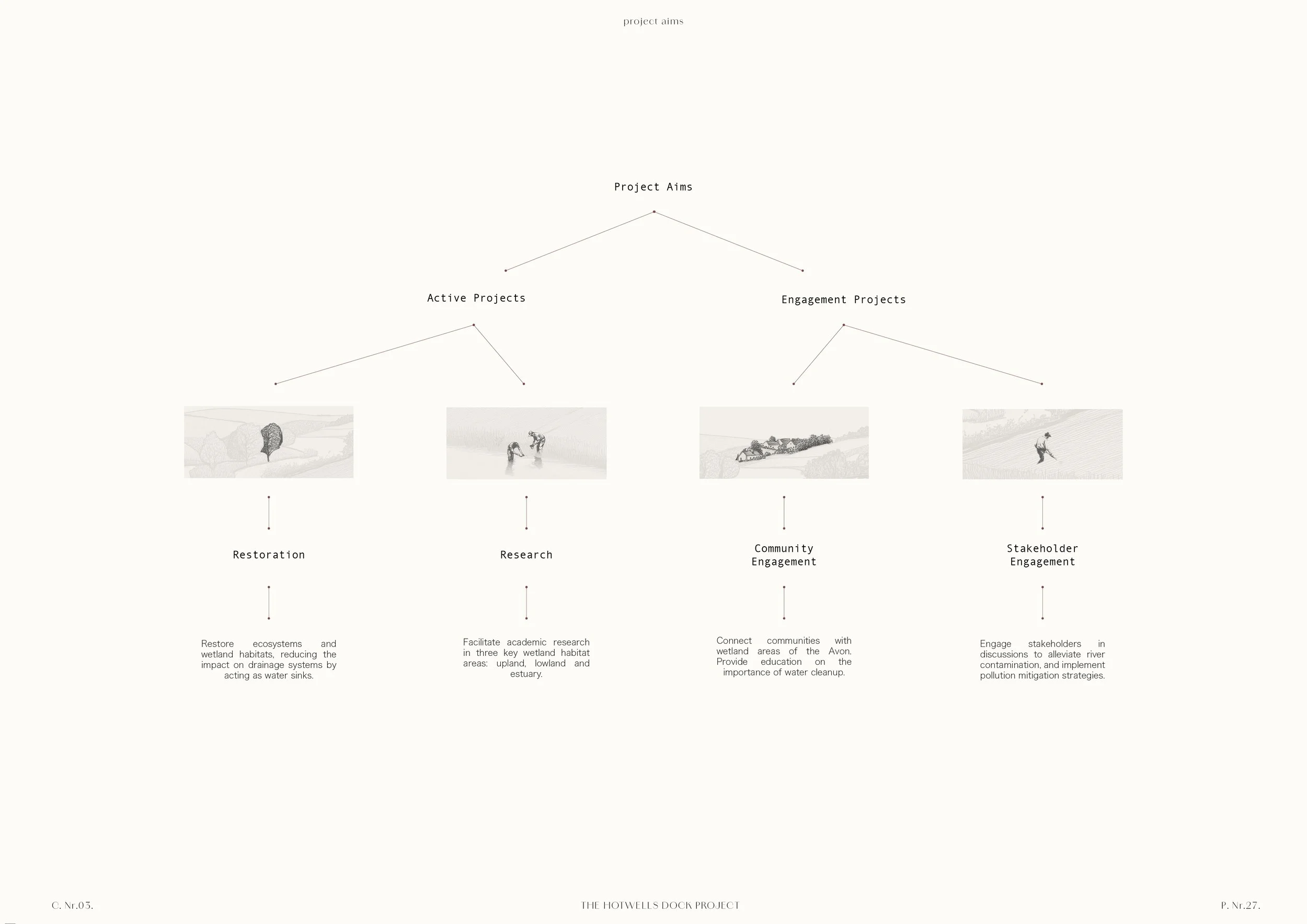
THE ISSUEThe Hotwells Dock Project explores how wastewater spills in the UK are not only in part due to poor regulation and ageing infrastructure, but are exacerbated by increased surface runoff due to clearing of wetland landscapes and the expansion of hardscaped developments. Without natural landscape water retention, surface runoff flows directly into drainage infrastructure which, due to a combined sewer network, leads to overwhelming quantities of water, forcing illegal discharges that result in detrimental effects on aquatic and riparian habitats.
THE RESPONSEAs a response, the project creates a distributed architectural framework for wetland recovery. The Hotwells Dock building itself reuses industrial steel elements from Bristols past as a base for research, education and stakeholder engagement while filter feeders, molluscs and seaweeds are cultivated for water purification on piers below in the intertidal zone. Here, a living architecture is created where plastic collection and tidal energy systems harness the environments energy while cleaning it simultaneously.
THE ISSUEThe Hotwells Dock Project explores how wastewater spills in the UK are not only in part due to poor regulation and inadequate infrastructure, but are exacerbated by increased surface runoff due to clearing of wetland landscapes and the expansion of hardscaped developments. Without natural landscape water retention, surface runoff flows directly into drainage infrastructure which - due to a combined sewer network - leads to overwhelming quantities of water, forcing wastewater spills and illegal discharges that result in detrimental effects on aquatic and riparian habitats.
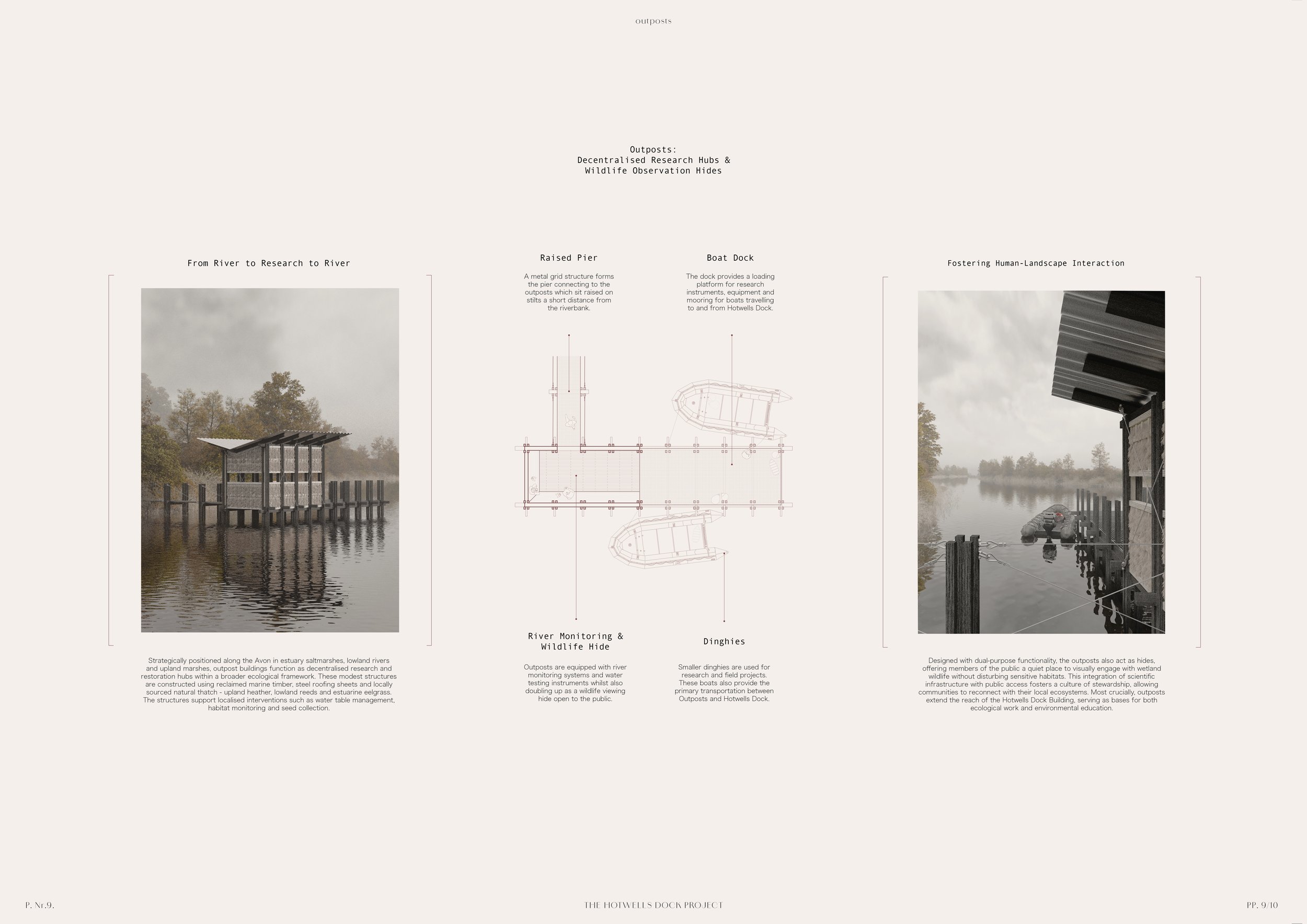
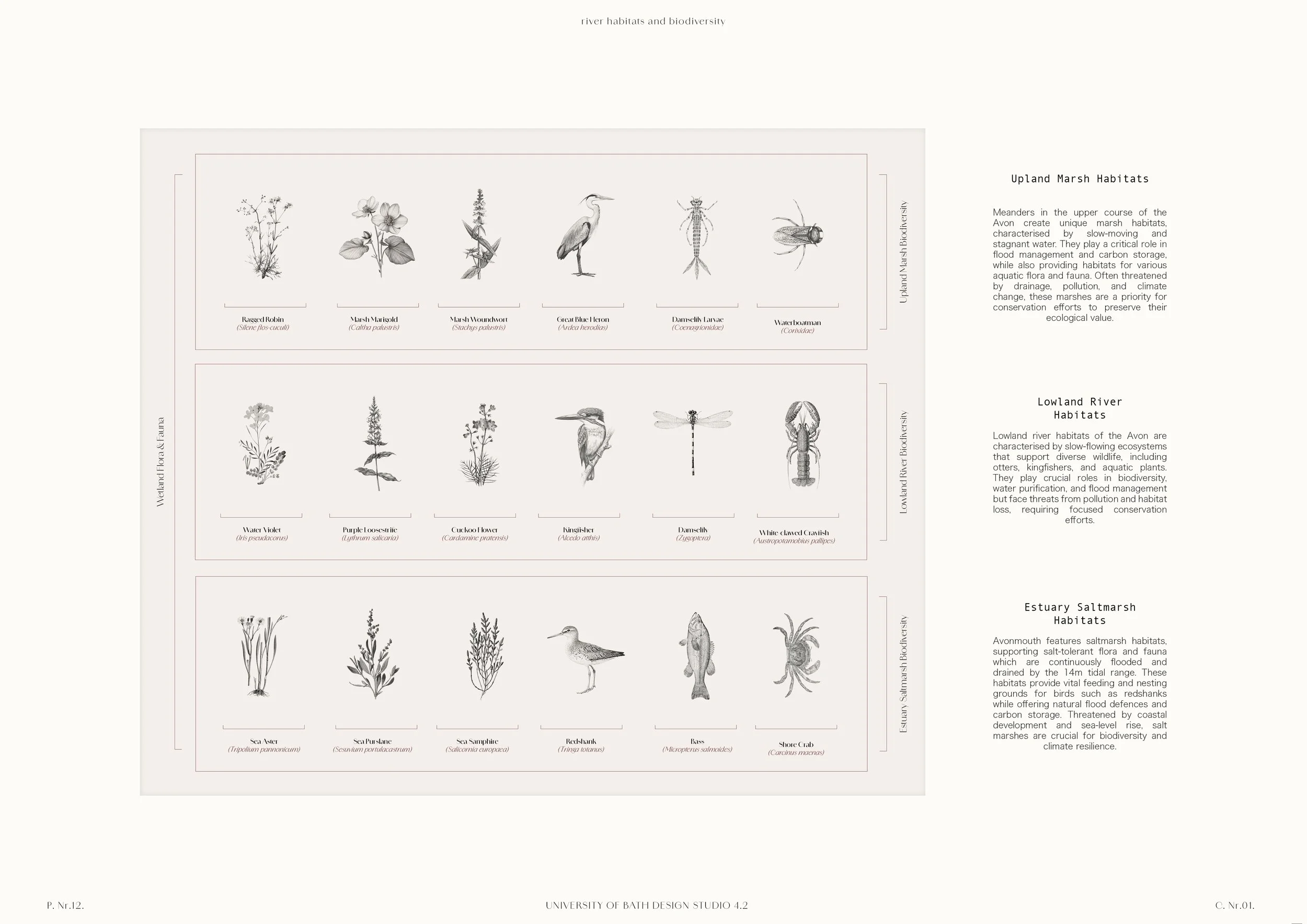
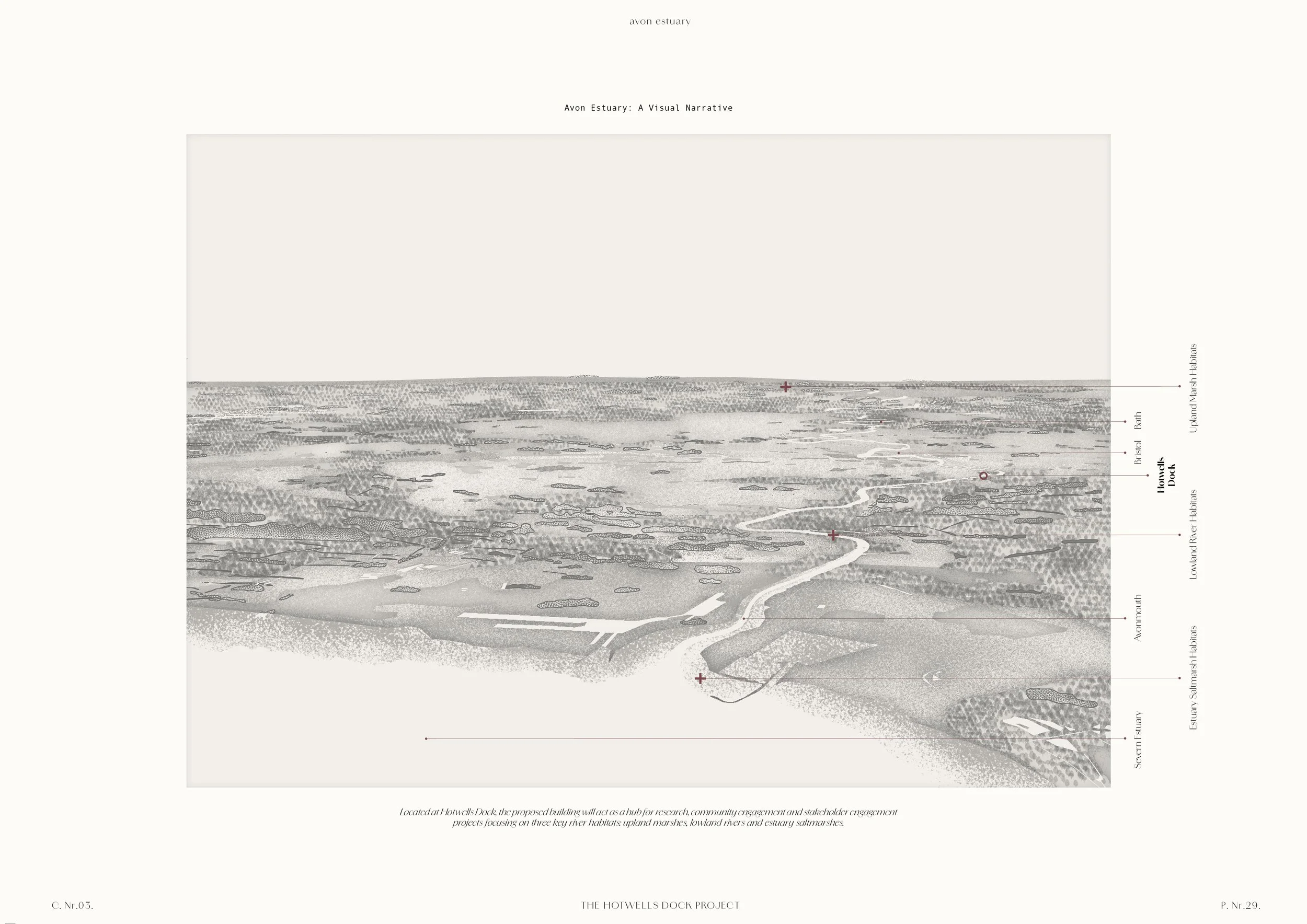
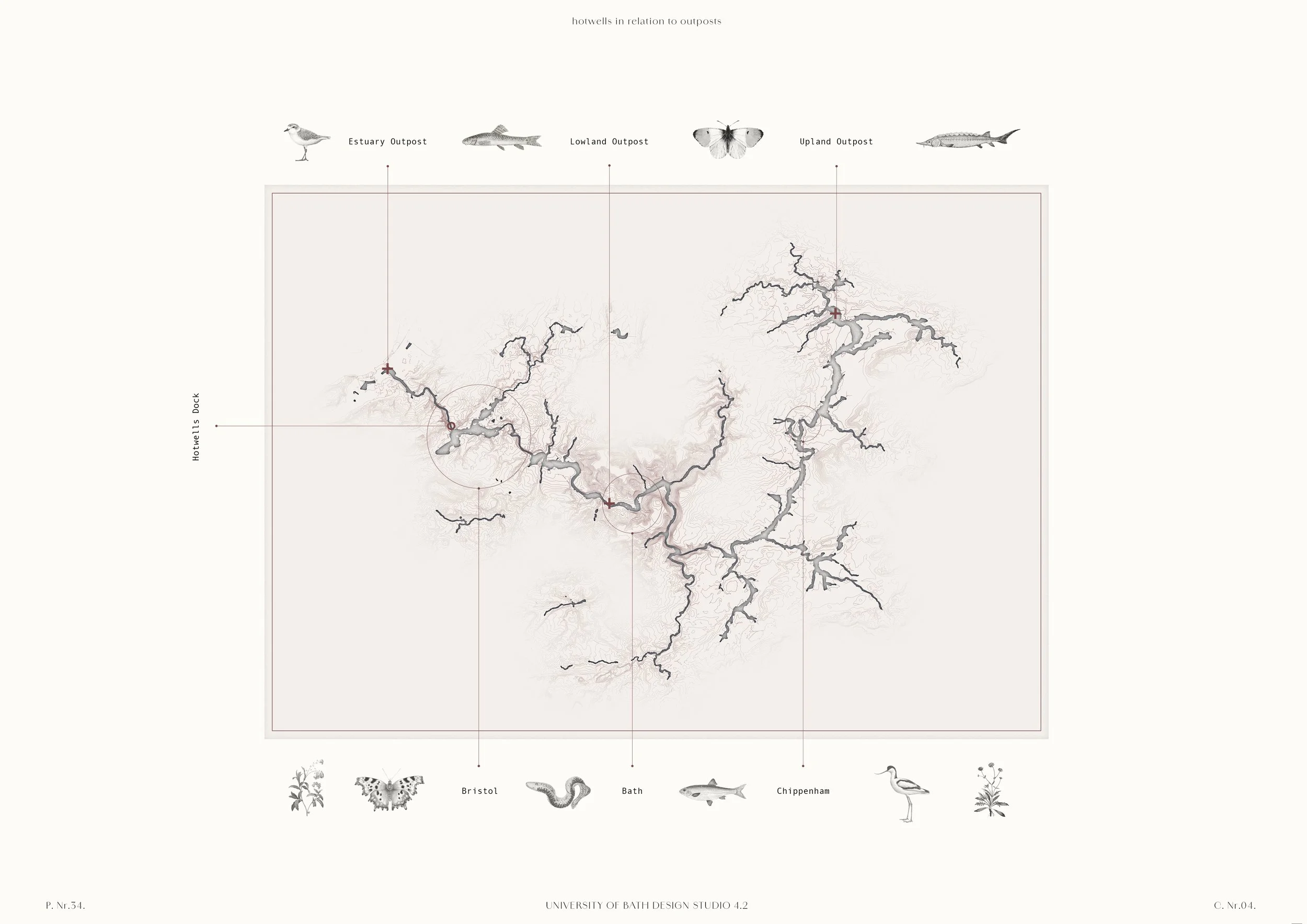
THE RESPONSEAs a response, the project creates a distributed architectural framework for wetland recovery. The Hotwells Dock building itself reuses industrial steel elements from Bristols past as a base for research, education and stakeholder engagement while filter feeders, molluscs and seaweeds are cultivated for water purification on piers below in the intertidal zone. Here, a living architecture is created where plastic collection and tidal energy systems harness the environments energy while cleaning it simultaneously. Outpost buildings upstream and downstream promote biodiversity to act as a catalyst for wetland repair by healing both the environment they inhabit, as well as expanding wetland areas - thus increasing the sponge effect of the natural landscape which mitigates flooding events, reduces surface runoff and eliminates wastewater spills.
The Hotwells Dock Project: NARRATIVE
The Hotwells Dock Project: NARRATIVE
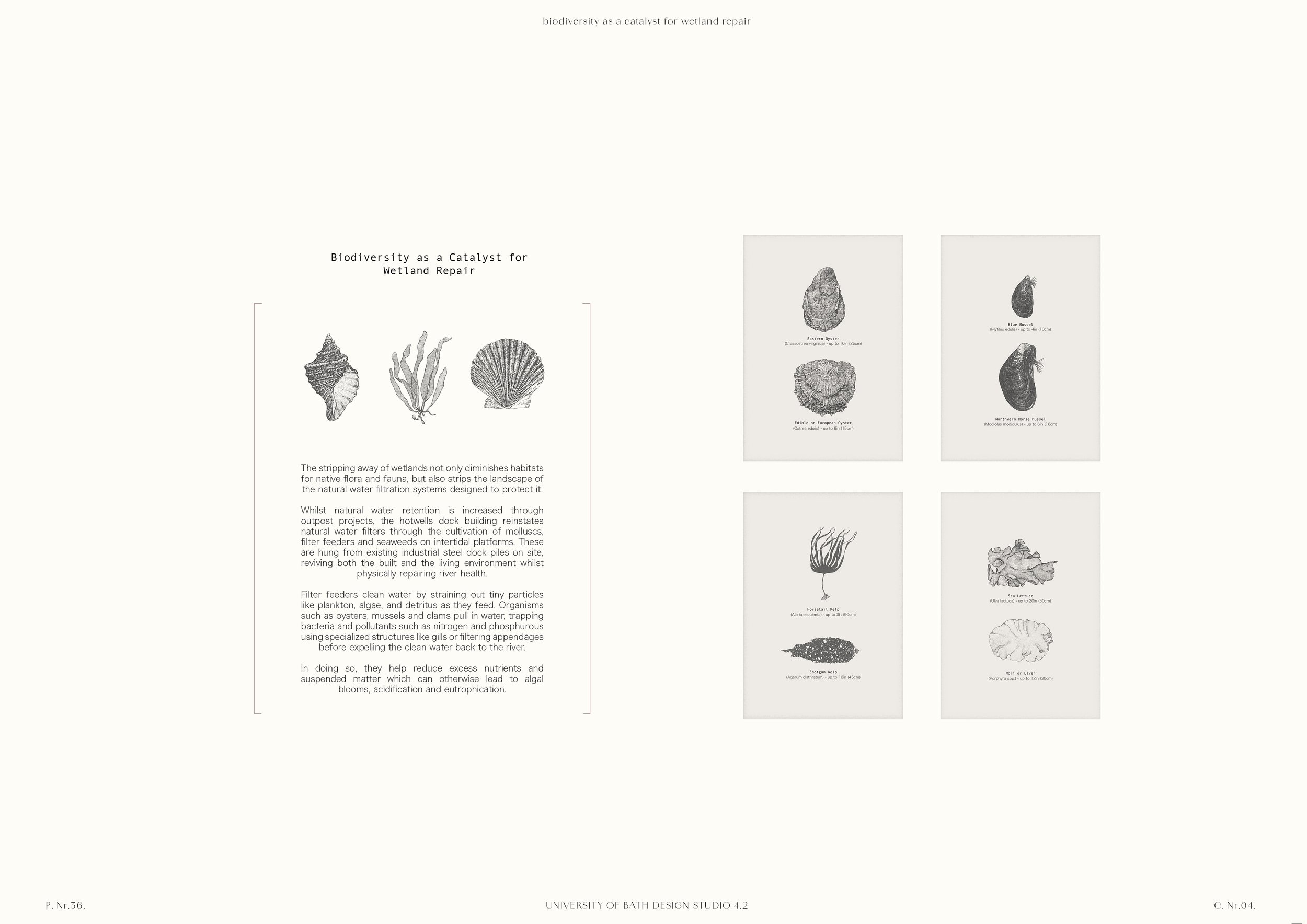
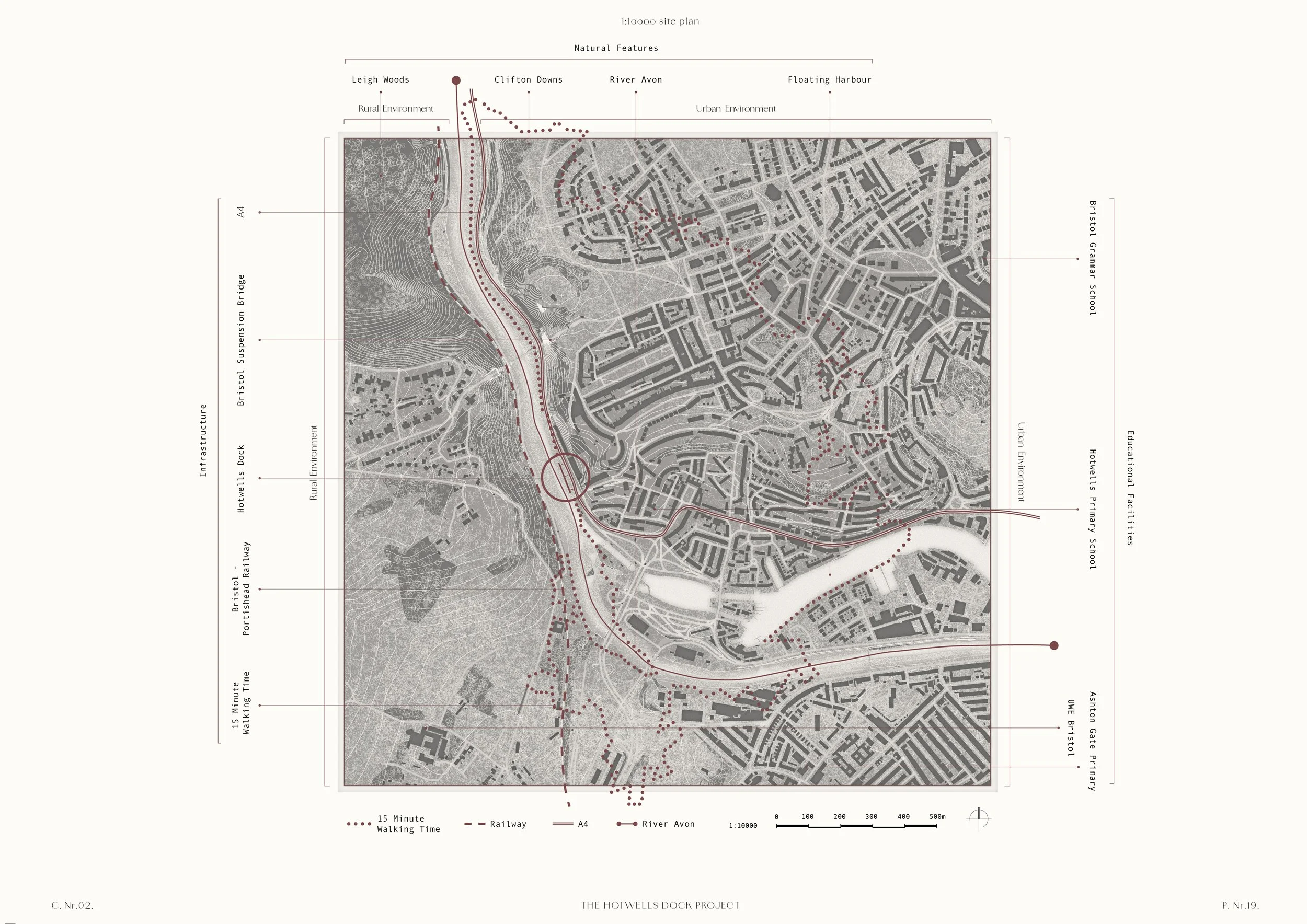
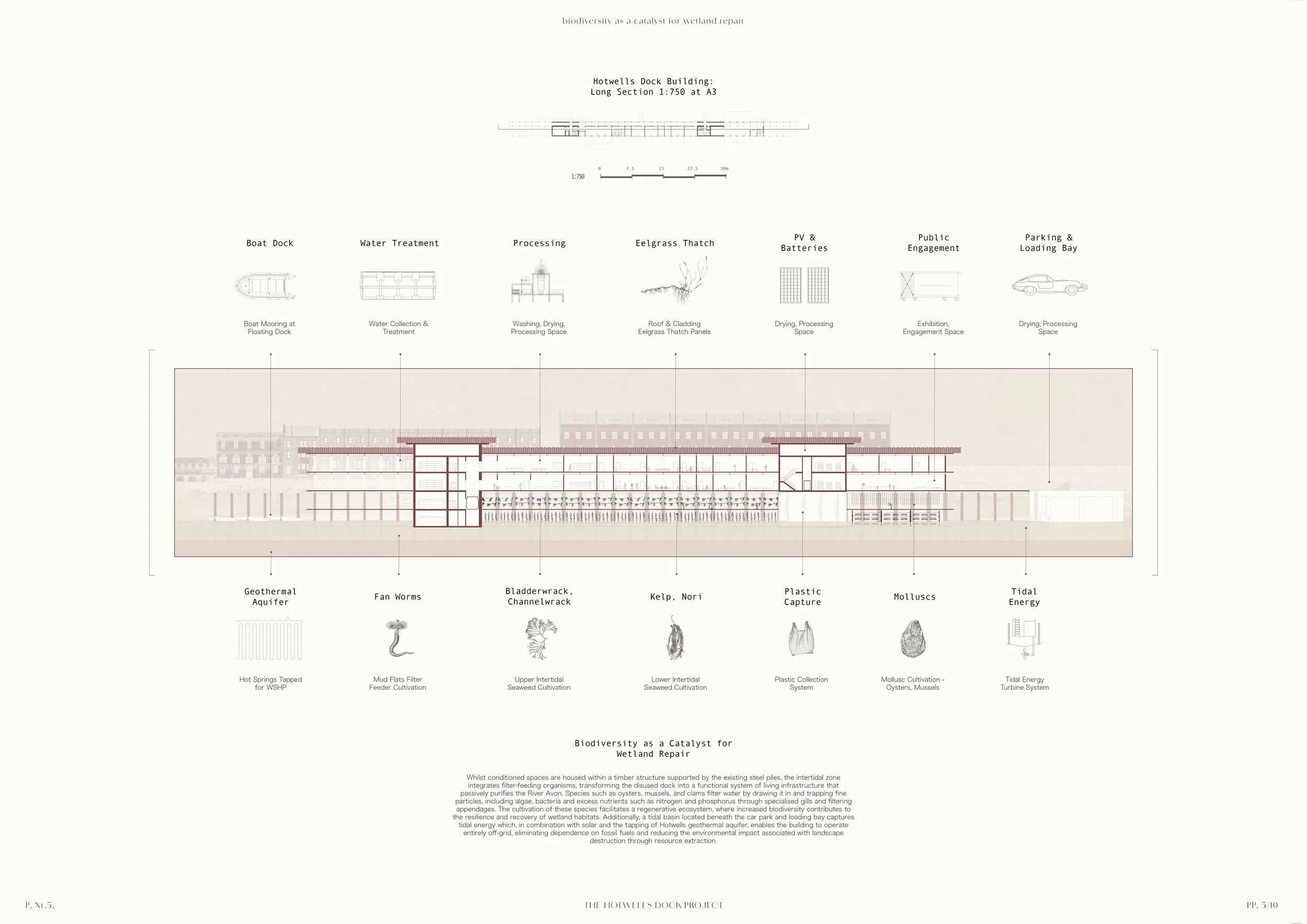
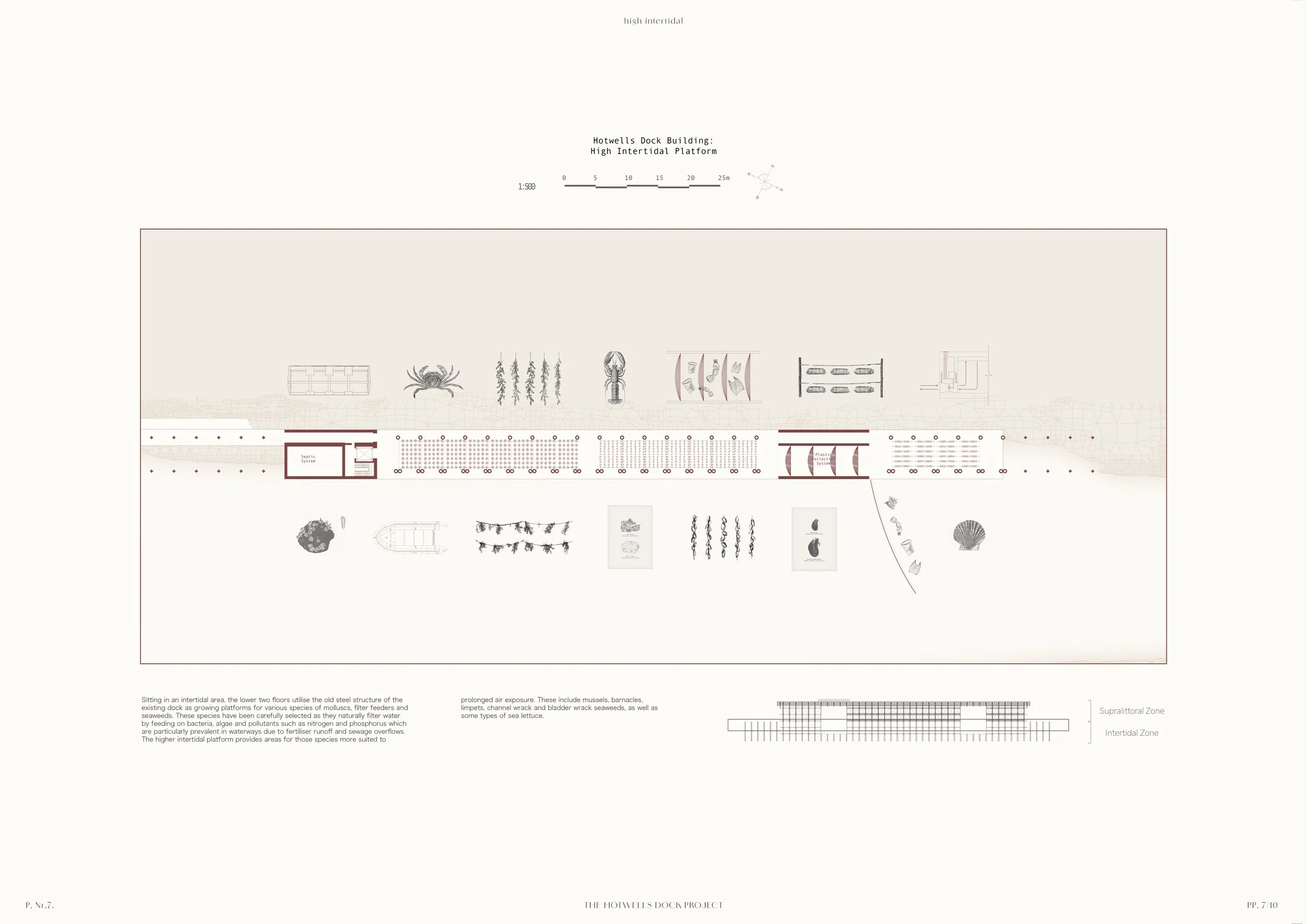
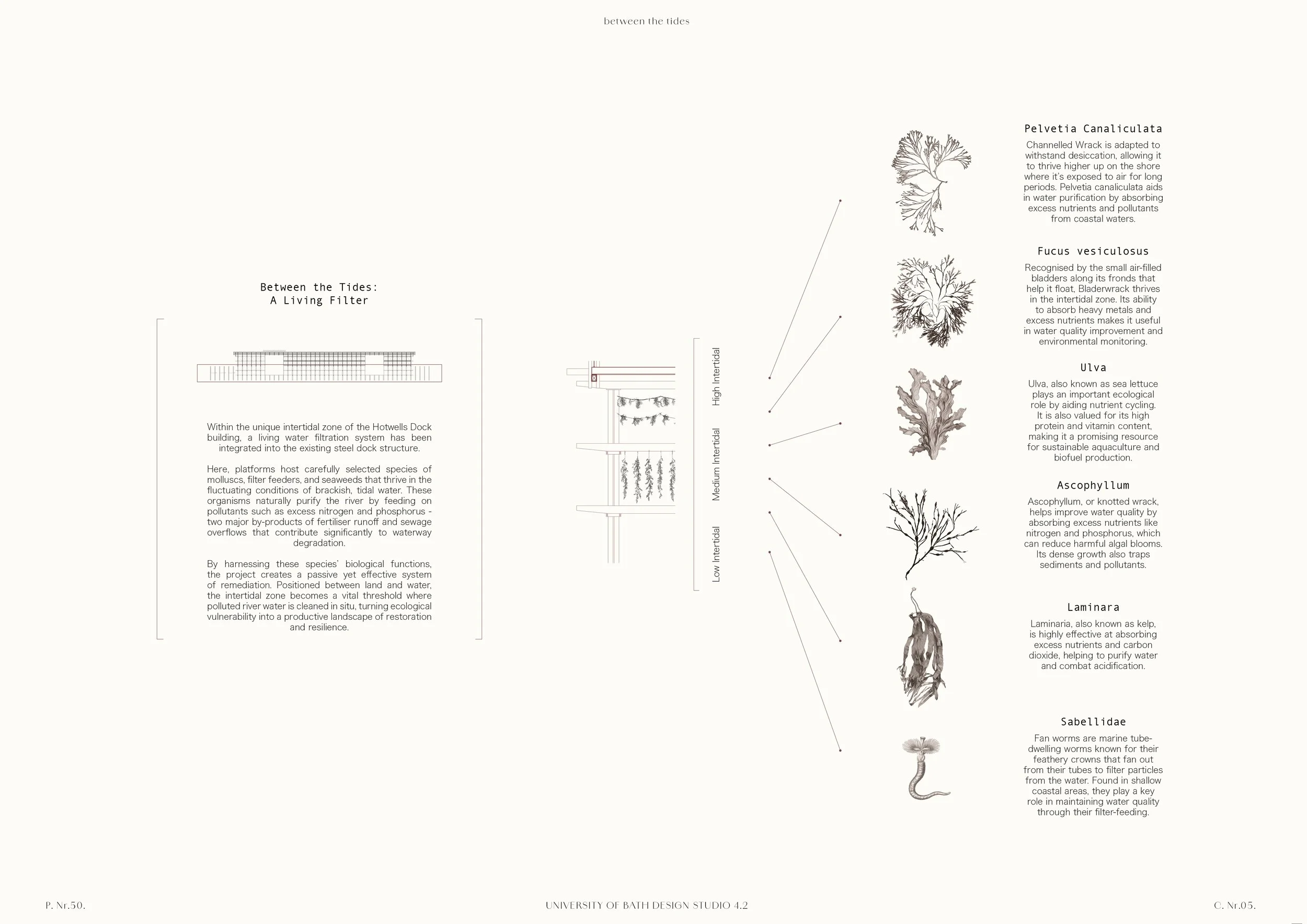
NATURAL WATER PURIFIERSThe stripping away of wetlands not only diminishes habitats for native flora and fauna, but also strips the landscape of the natural water filtration systems designed to protect it. Whilst natural water retention is increased through outpost projects, the hotwells dock building reinstates natural water filters through the cultivation of molluscs, filter feeders and seaweeds on intertidal platforms. These are hung from existing industrial steel dock piles on site, reviving both the built and the living environment whilst physically repairing river health.
MOLLUSCS, SEAWEEDS & FILTER FEEDERSFilter feeders clean water by straining out tiny particles like plankton, algae, and detritus as they feed. Organisms such as oysters, mussels and clams pull in water, trapping bacteria and pollutants such as nitrogen and phosphurous using specialized structures like gills or filtering appendages before expelling the clean water back to the river. In doing so, they help reduce excess nutrients and suspended matter which can otherwise lead to algal blooms, acidification and eutrophication.
The stripping away of wetlands not only diminishes habitats for native flora and fauna, but also strips the landscape of the natural water filtration systems designed to protect it. Whilst natural water retention is increased through outpost projects, the hotwells dock building reinstates natural water filters through the cultivation of molluscs, filter feeders and seaweeds on intertidal platforms. These are hung from existing industrial steel dock piles on site, reviving both the built and the living environment whilst physically repairing river health.
NATURAL WATER PURIFIERSMOLLUSCS, SEAWEEDS & FILER FEEDERSFilter feeders clean water by straining out tiny particles like plankton, algae, and detritus as they feed. Organisms such as oysters, mussels and clams pull in water, trapping bacteria and pollutants such as nitrogen and phosphorus using specialised structures like gills or filtering appendages before expelling the clean water back to the river. In doing so, they help reduce excess nutrients and suspended matter which can otherwise lead to algal blooms, acidification and eutrophication.
The Hotwells Dock Project: APPROACH
The Hotwells Dock Project: APPROACH
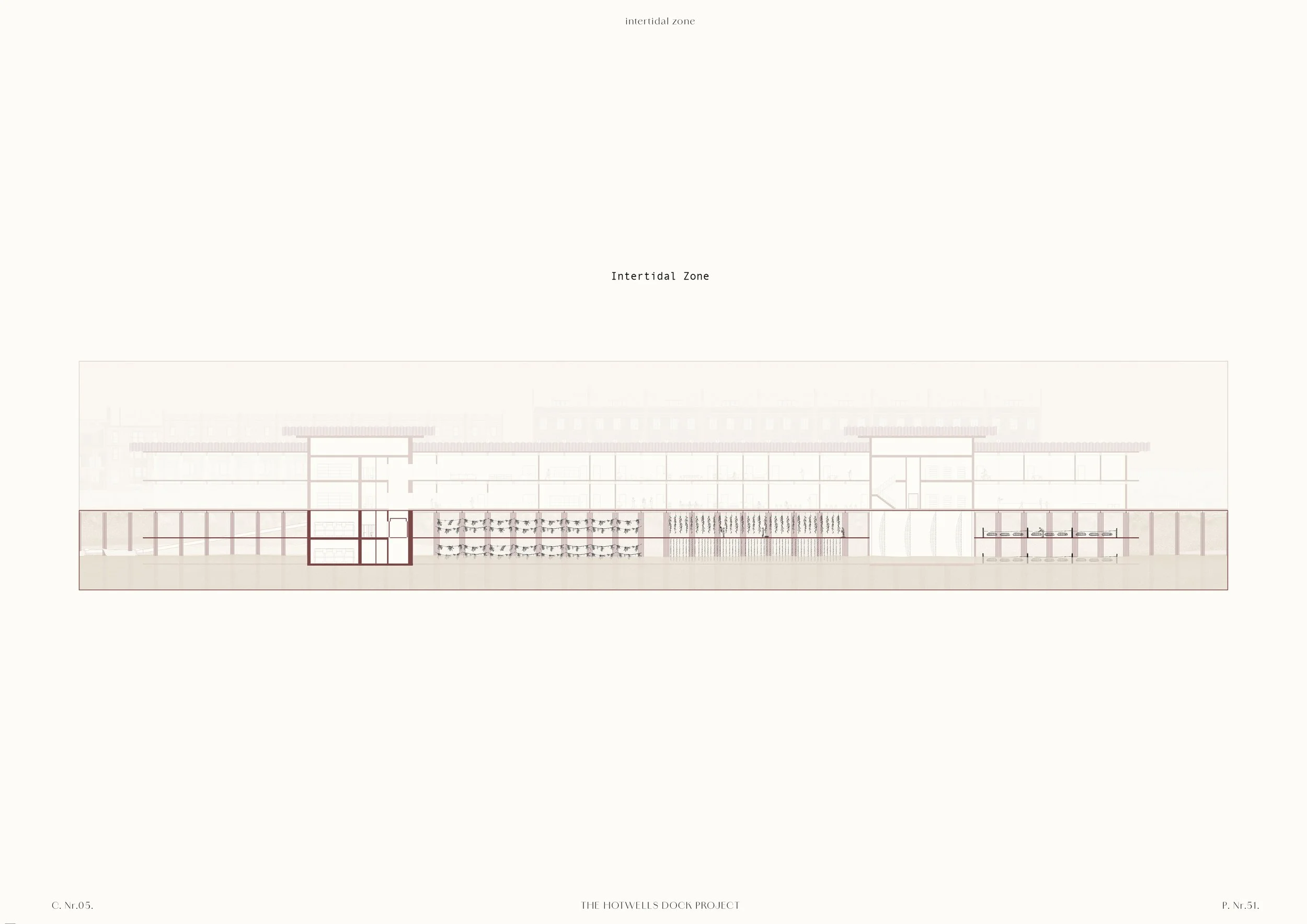
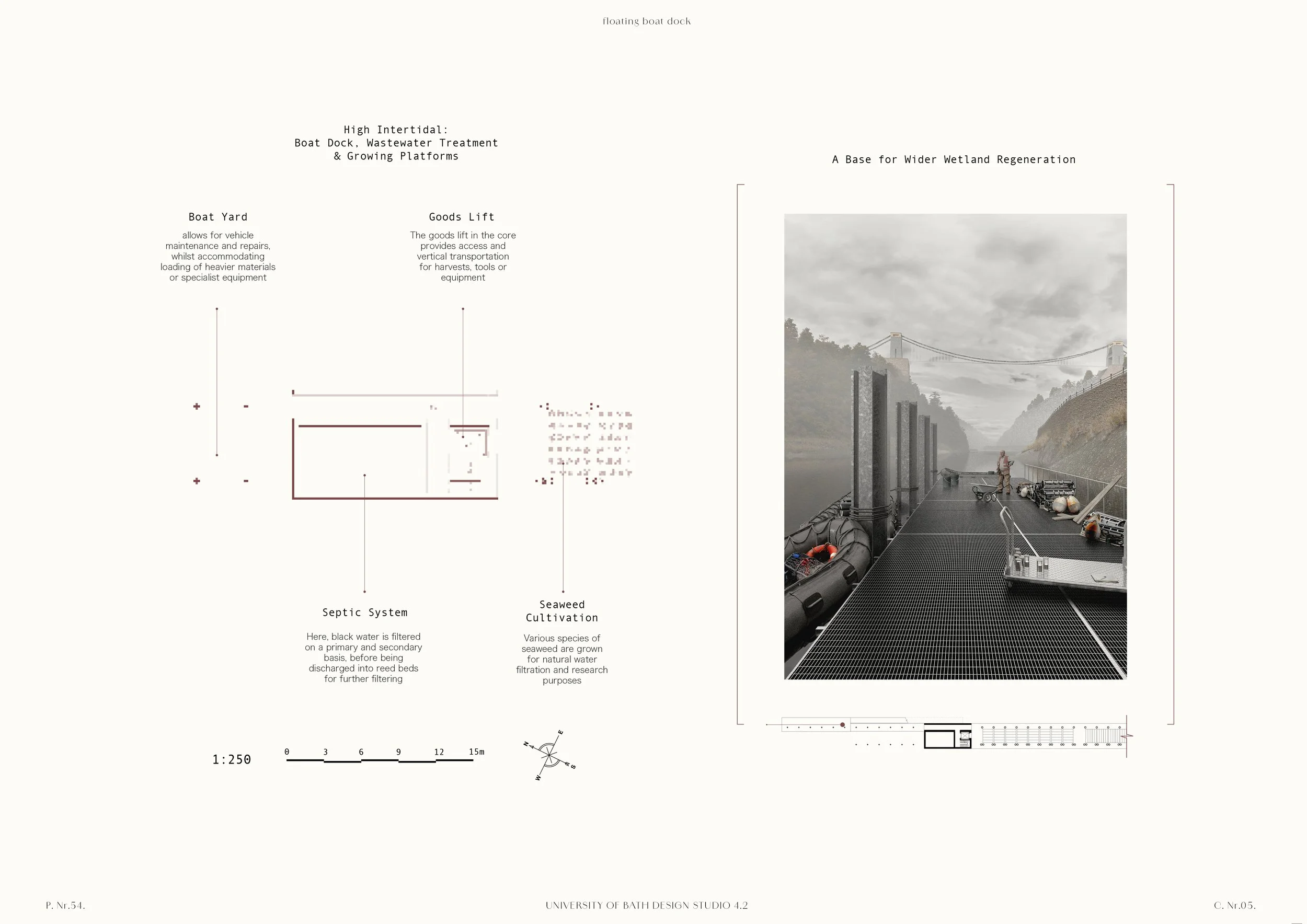
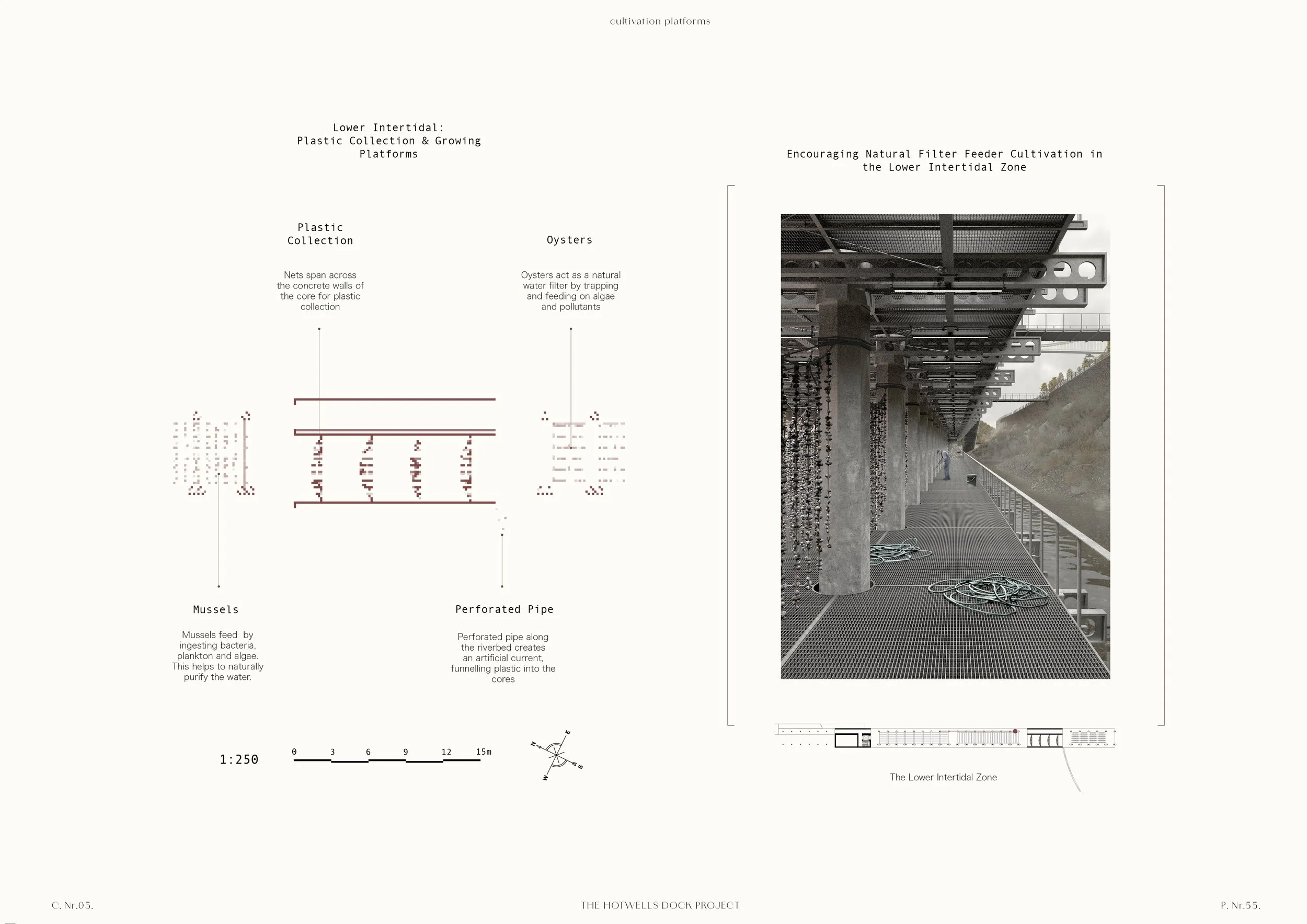
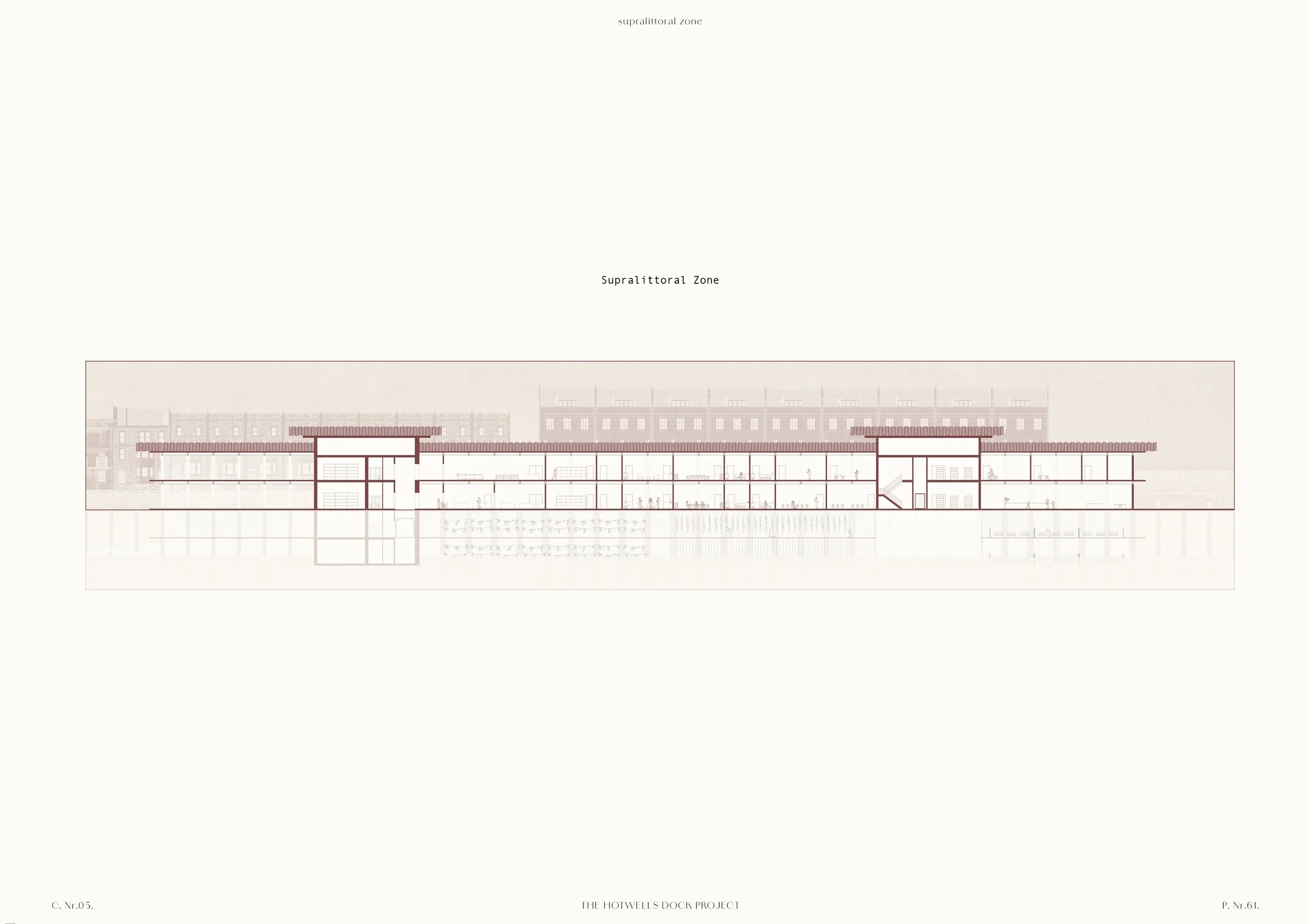
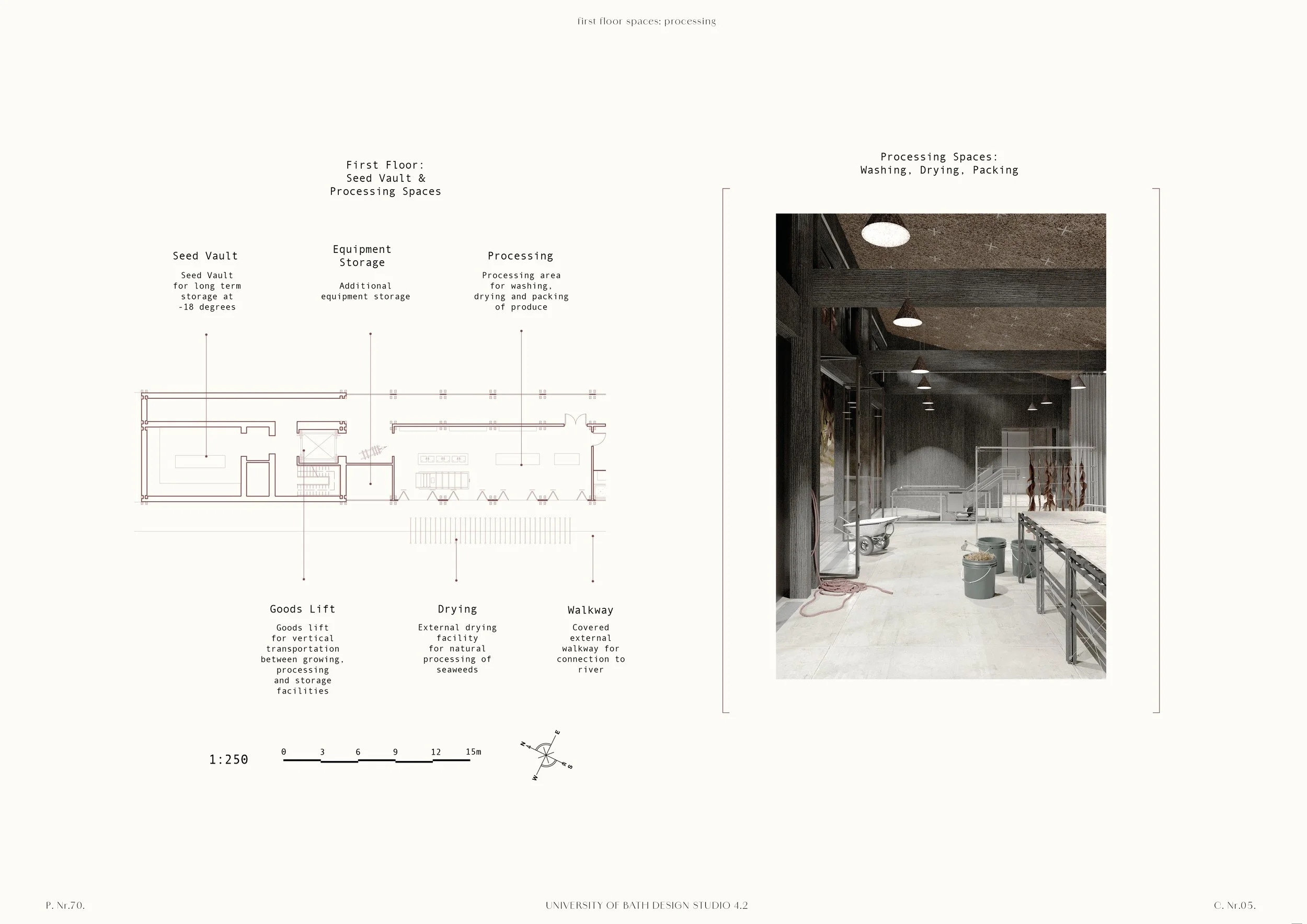
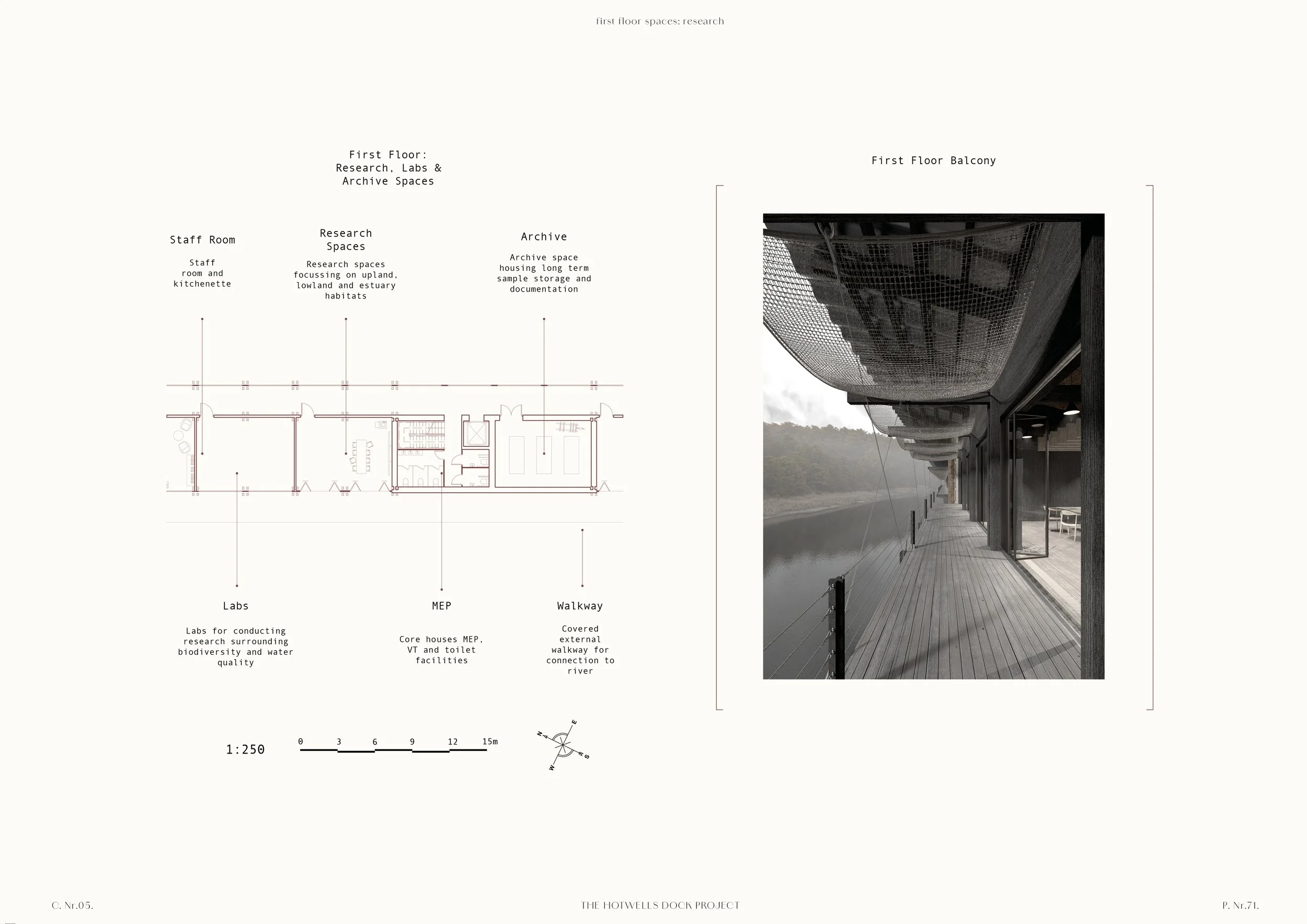
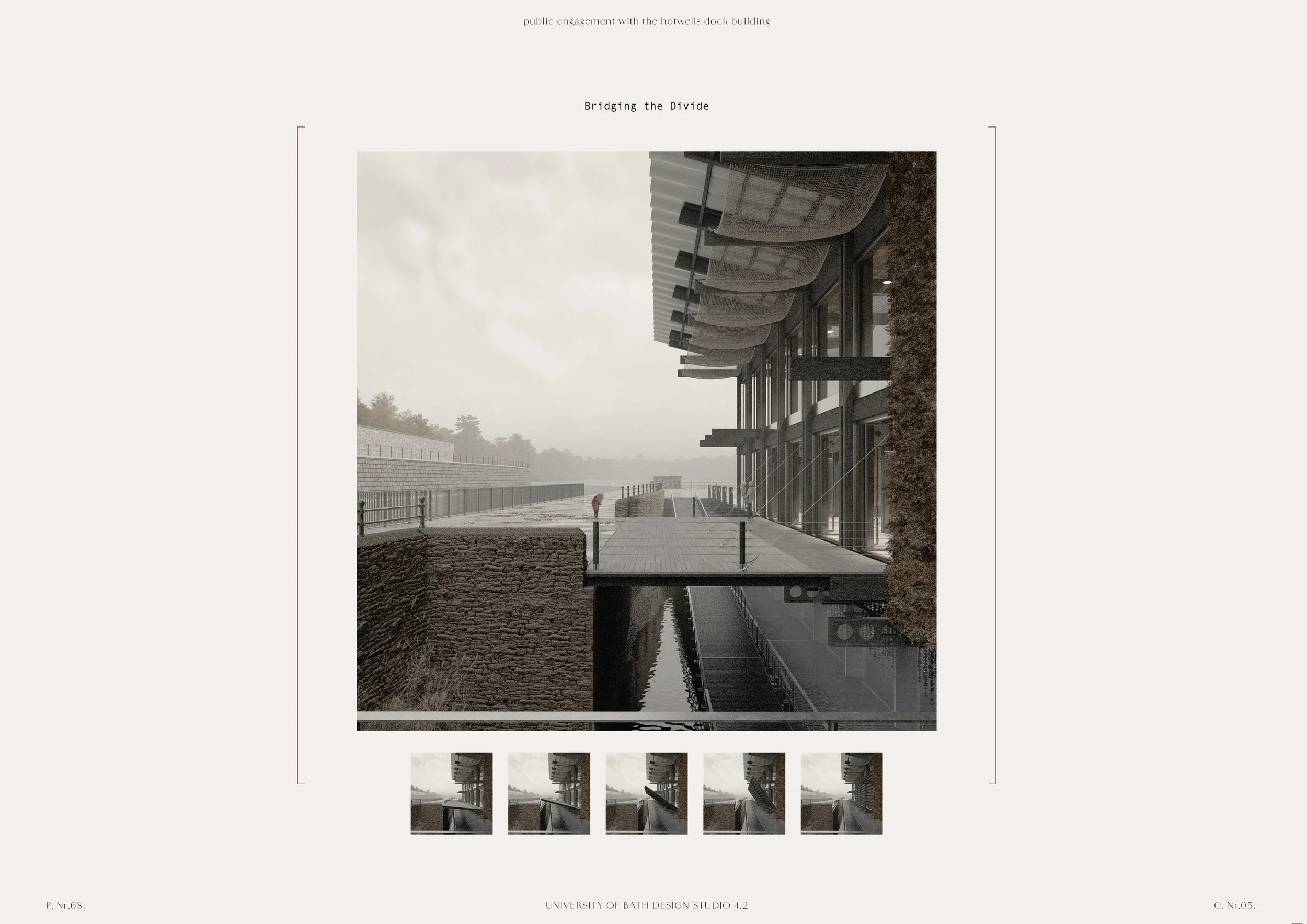
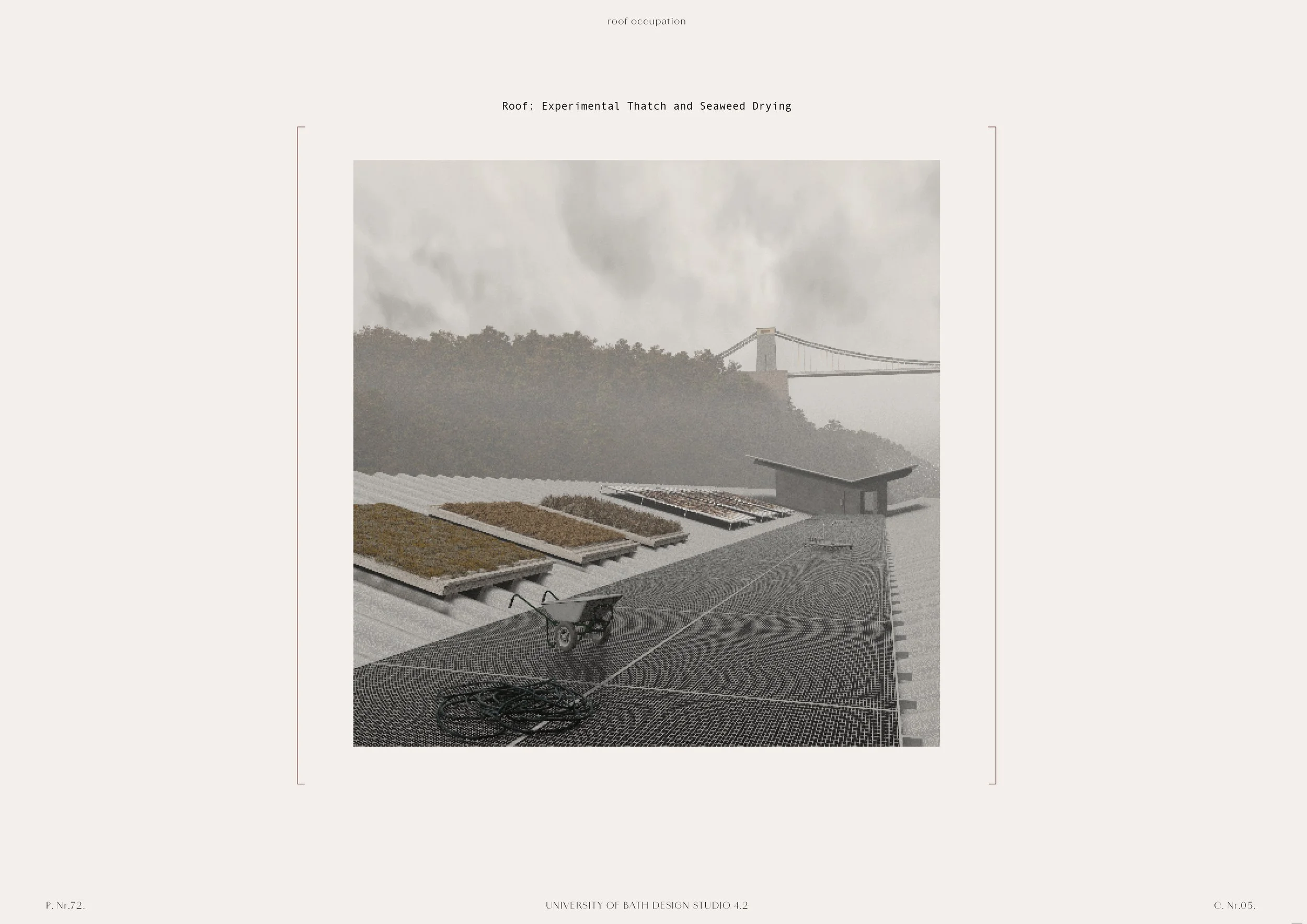
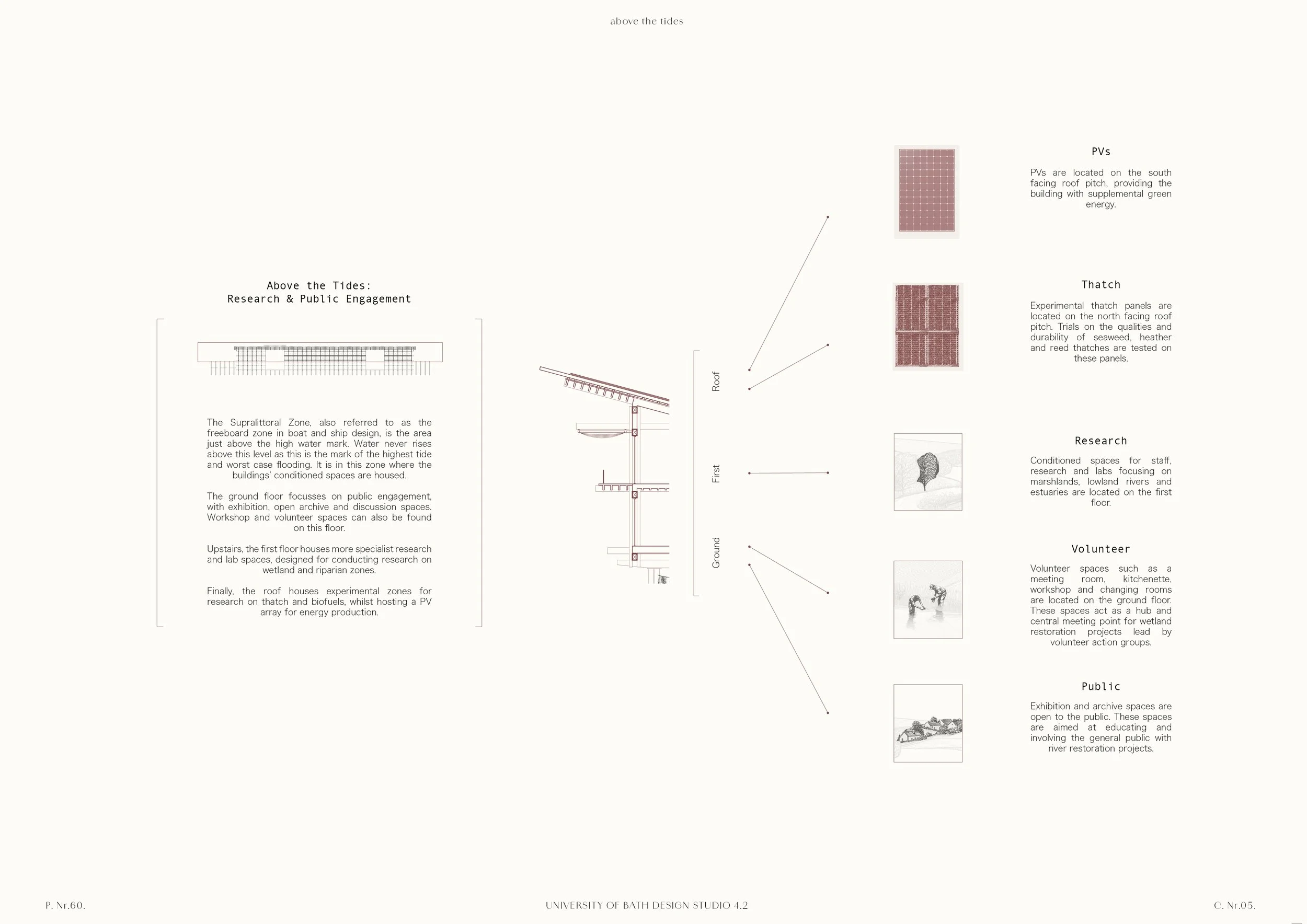
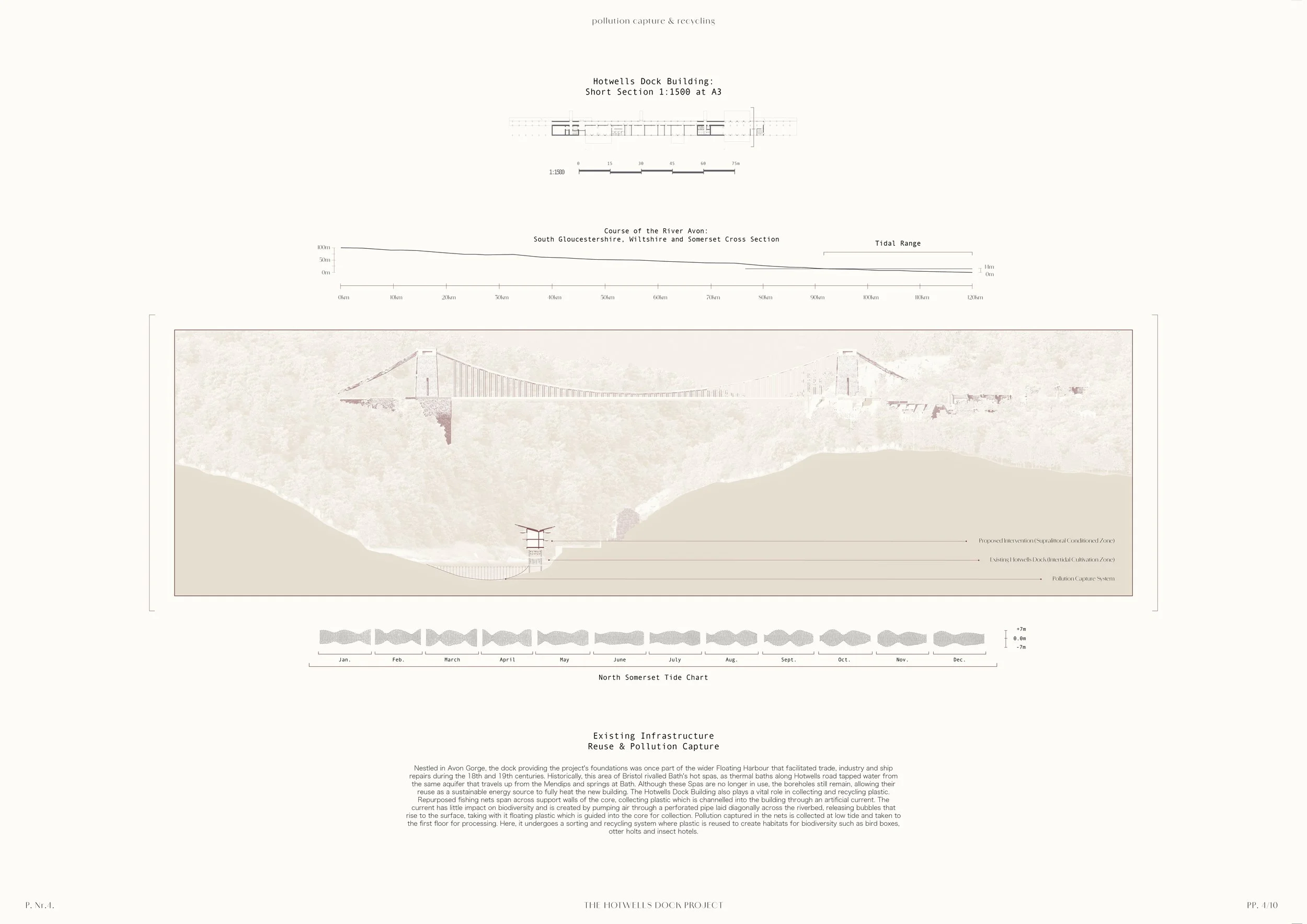
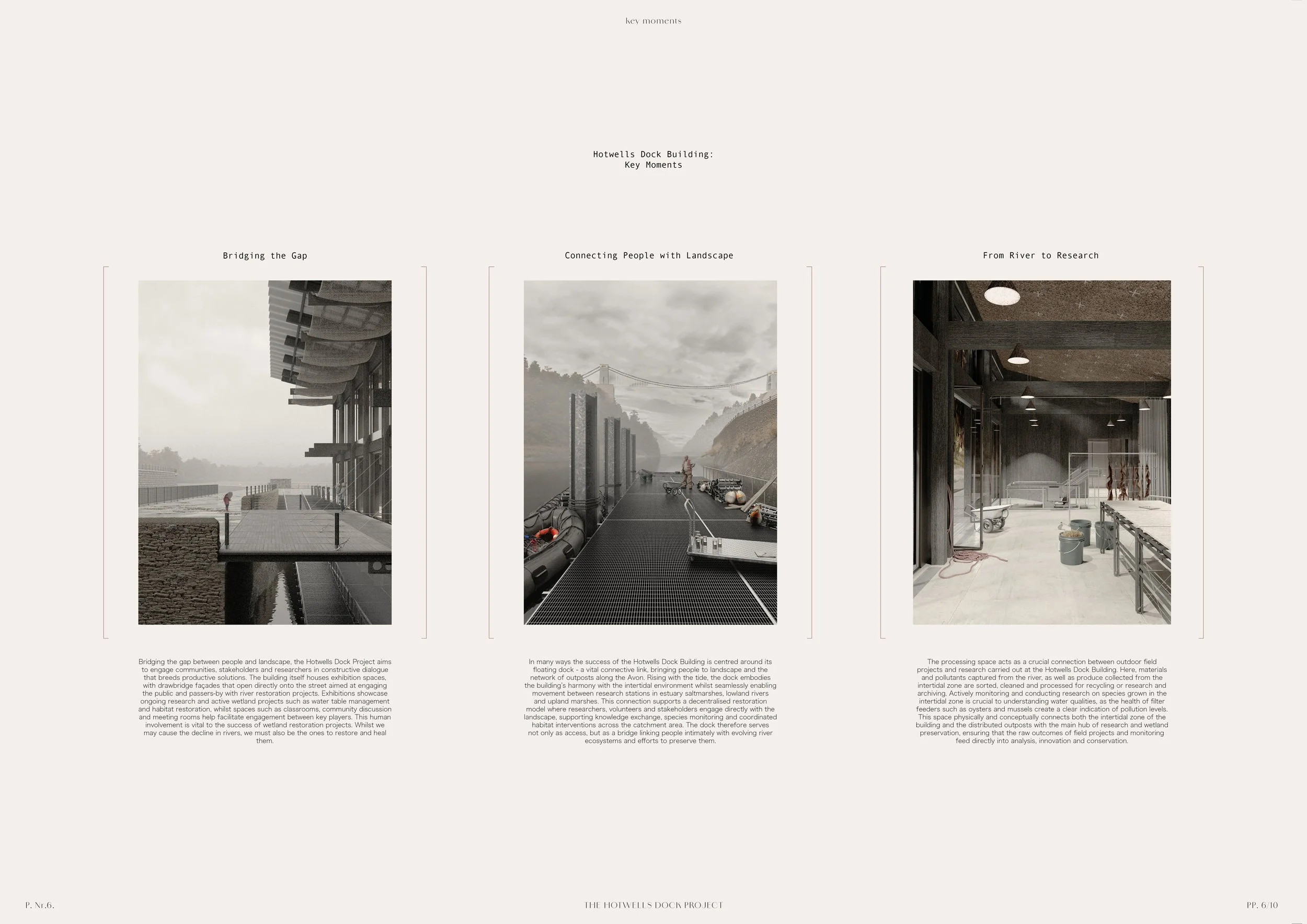
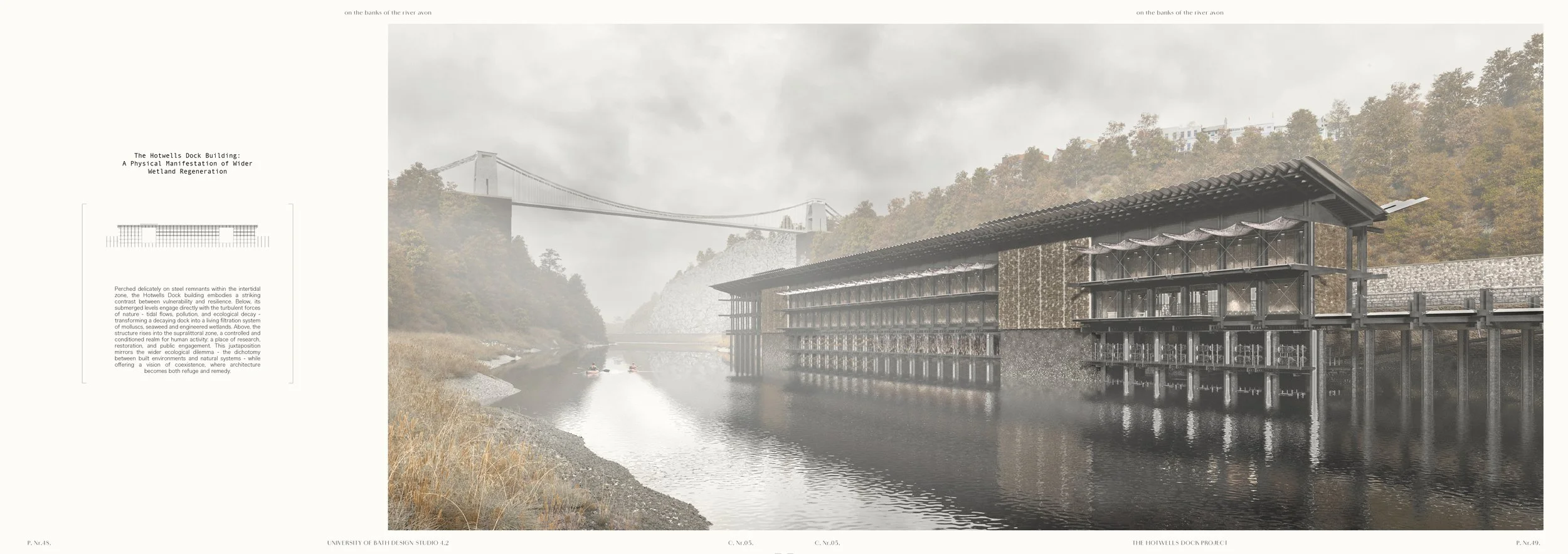
A LIVING ARCHITECTUREPerched delicately on steel remnants within the intertidal zone, the Hotwells Dock building embodies a striking contrast between vulnerability and resilience. Below, its submerged levels engage directly with the turbulent forces of nature: tidal flows, pollution, and ecological decay transforming a decaying dock into a living filtration system of molluscs, seaweed and engineered wetlands.
STORIES OF REFUGE & REMEDYAbove, the structure rises into the supralittoral zone, a controlled and conditioned realm for human activity: a place of research, restoration, and public engagement. This juxtaposition mirrors the wider ecological dilemma the dichotomy between built environments and natural systems while offering a vision of coexistence, where architecture becomes both refuge and remedy.
Perched delicately on steel remnants within the intertidal zone, the Hotwells Dock building embodies a striking contrast between vulnerability and resilience. Below, its submerged levels engage directly with the turbulent forces of nature: tidal flows, pollution, and ecological decay, transforming a decaying dock into a living filtration system of molluscs, seaweed and engineered wetlands.
A LIVING ARCHITECTUREAbove, the structure rises into the supralittoral zone, a controlled and conditioned realm for human activity: a place of research, restoration, and public engagement. This juxtaposition mirrors the wider ecological dilemma, the dichotomy between built environments and natural systems while offering a vision of coexistence, where architecture becomes both refuge and remedy.
STORIES OF REFUGE & REMEDYThe Hotwells Dock Project: PROPOSAL
The Hotwells Dock Project: PROPOSAL
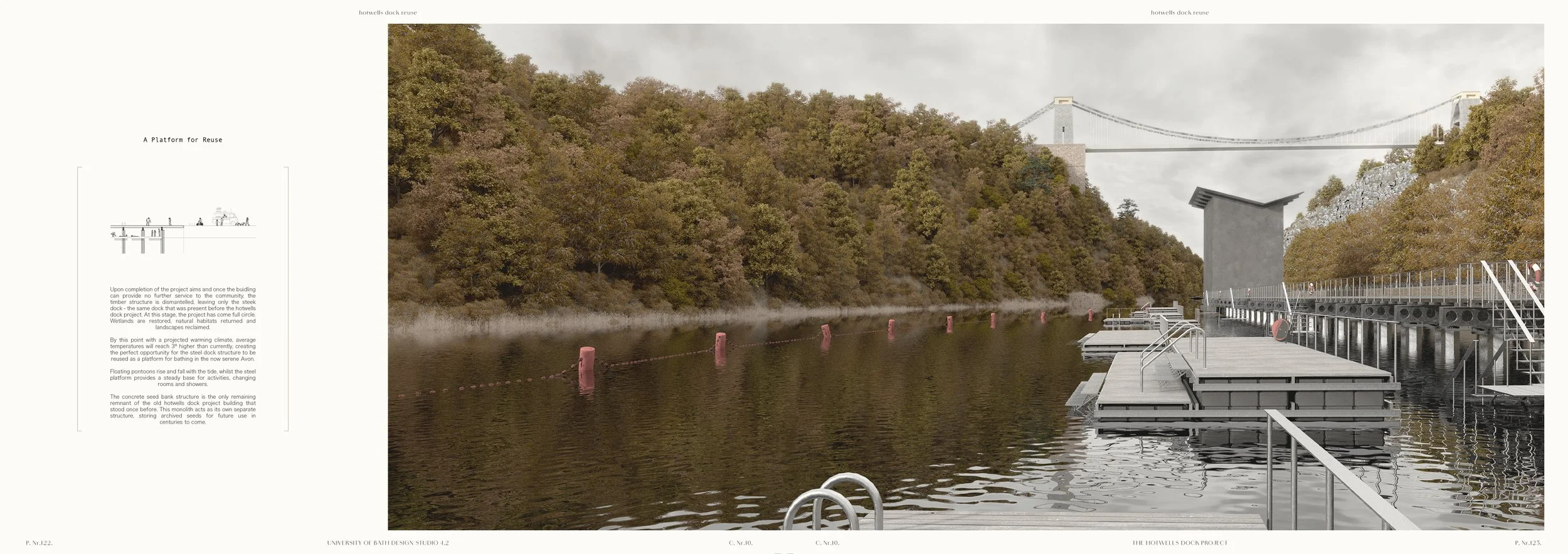
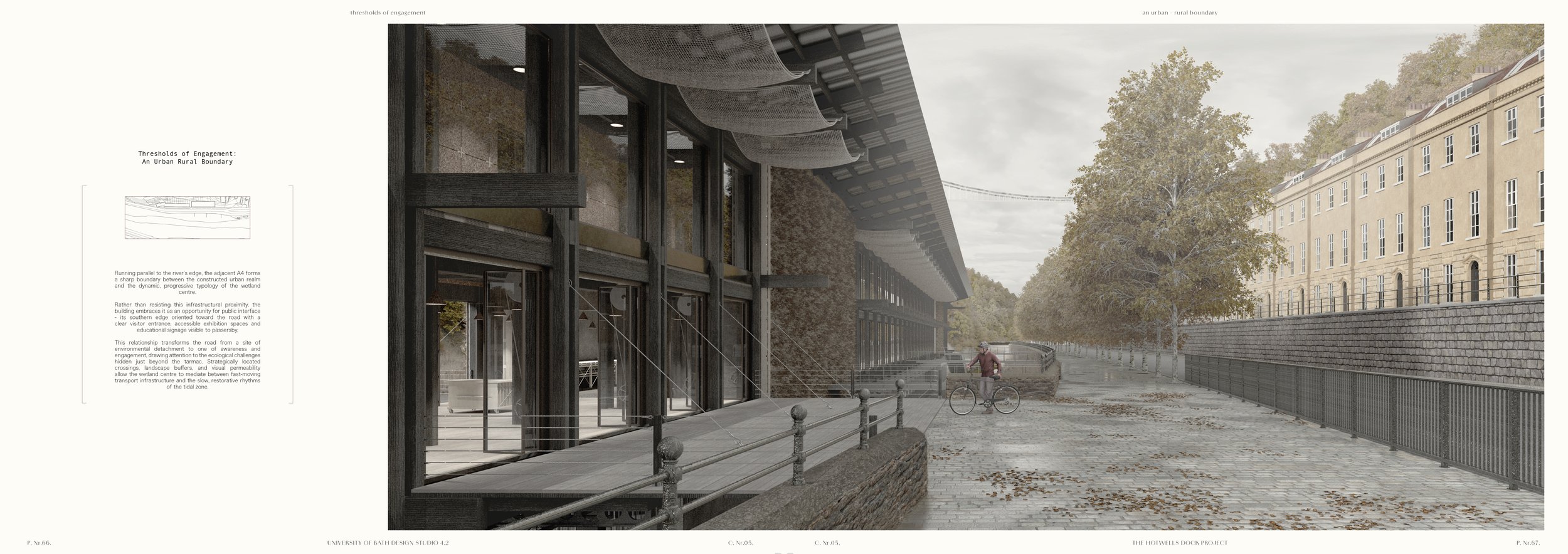
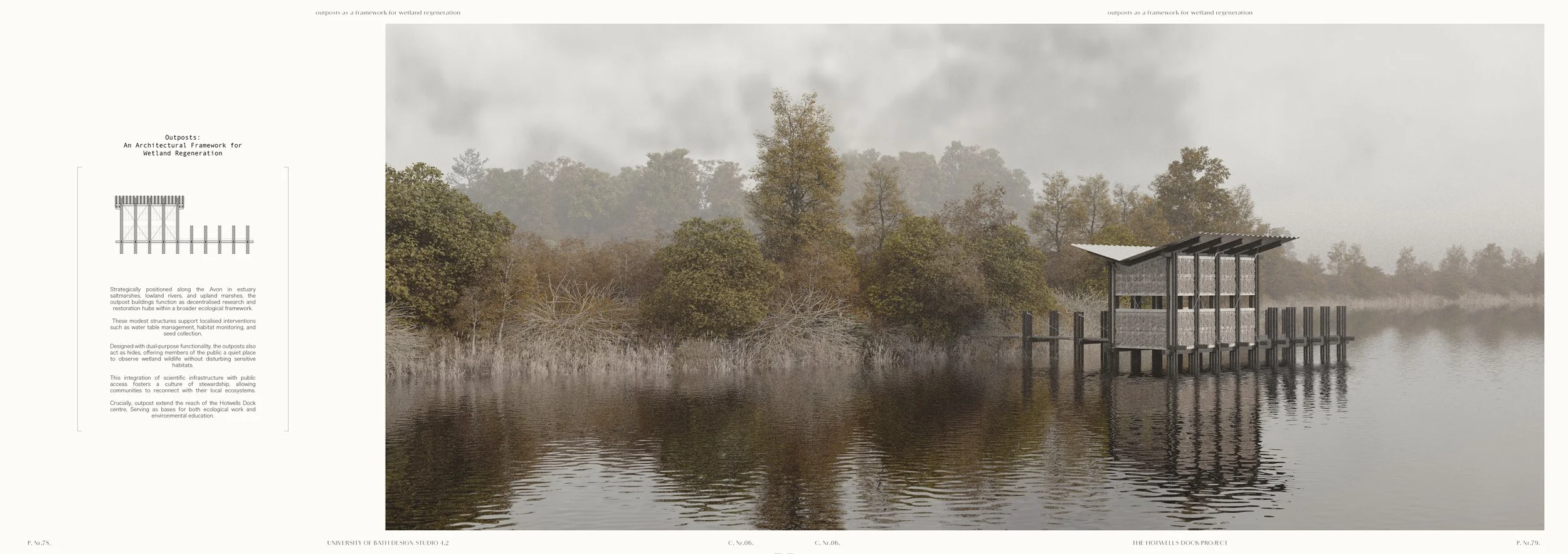
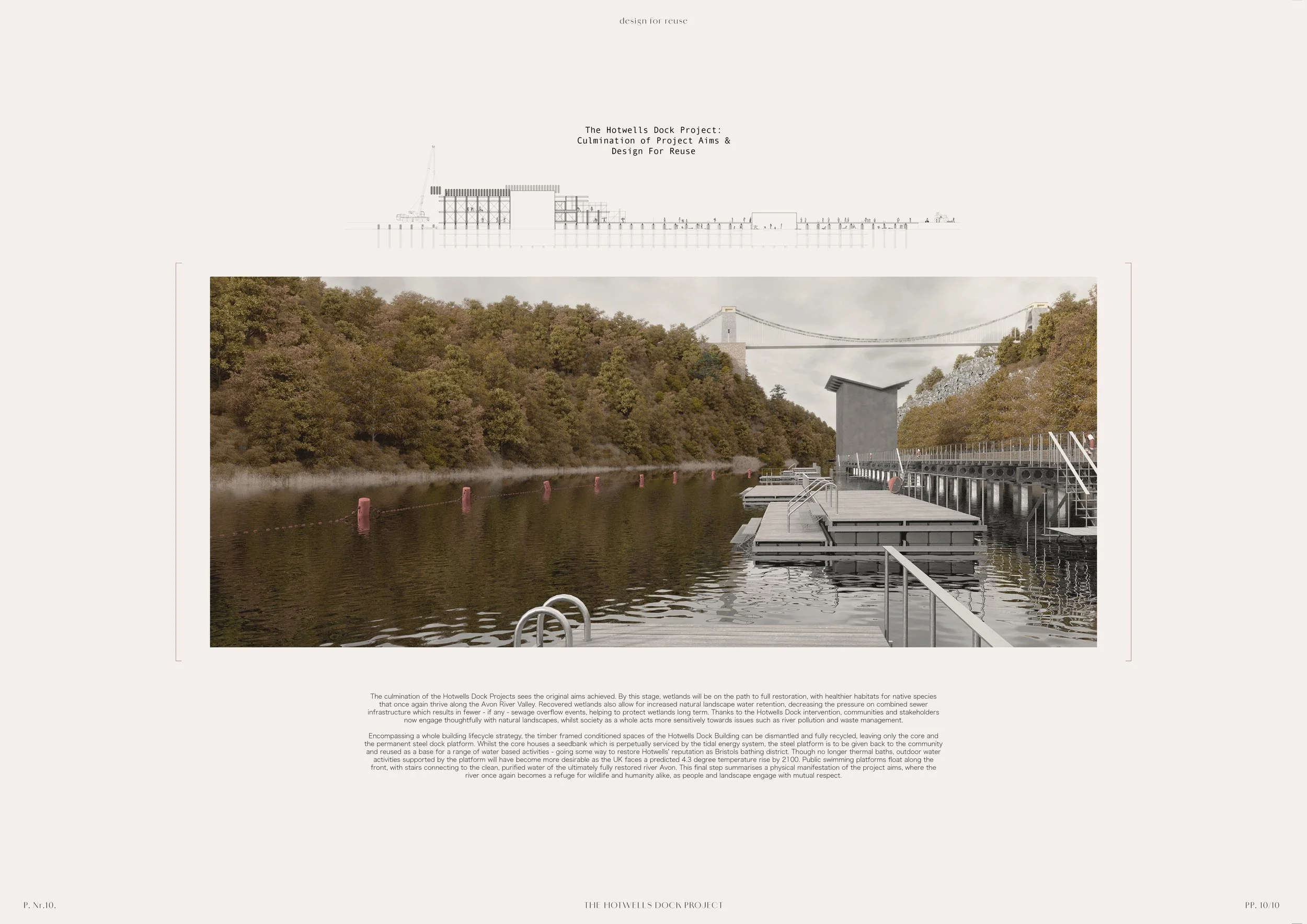
PROJECT CULMINATIONUpon completion of the project aims and once the building provides no further use for the community, the timber structure is dismantled, leaving only the steel dock, which returns to the same state that was present before the Hotwells Dock Project began. At this stage, the project has come full circle. Wetlands are restored, natural habitats returned and landscapes reclaimed. The Avon is once again pure, with biodiversity thriving along its banks in a healthy, balanced ecosystem.
PROJECT CONTINUATIONIn the now serene Avon and with average temperatures >3º higher, the opportunity is created for the dock to be reused as a platform for bathing. Floating pontoons rise and fall with the tide, whilst the steel platform provides a steady base for activities, changing rooms and showers. The concrete core seed bank is the only remnant of the old structure that stood once before. This monolith acts as its own separate building, storing archived seeds for future use.
PROJECT CULMINATIONUpon completion of the project aims and once the building provides no further use for the community, the timber structure is dismantled, leaving only the steel dock, which returns to the same state that was present before the Hotwells Dock Project began. At this stage, the project has come full circle. Wetlands are restored, natural habitats returned and landscapes reclaimed. The Avon is once again pure, with biodiversity thriving along its banks in a healthy, balanced ecosystem.
PROJECT
LEGACY
In the now serene Avon and with average temperatures >3º higher, the opportunity is created for the dock to be reused as a platform for bathing. Floating pontoons rise and fall with the tide, whilst the steel platform provides a steady base for activities, changing rooms and showers. The concrete core seed bank is the only remnant of the old structure that stood once before. This monolith acts as its own separate building, storing archived seeds for future use.
The Hotwells Dock Project: PROCESS
The Hotwells Dock Project: PROCESS
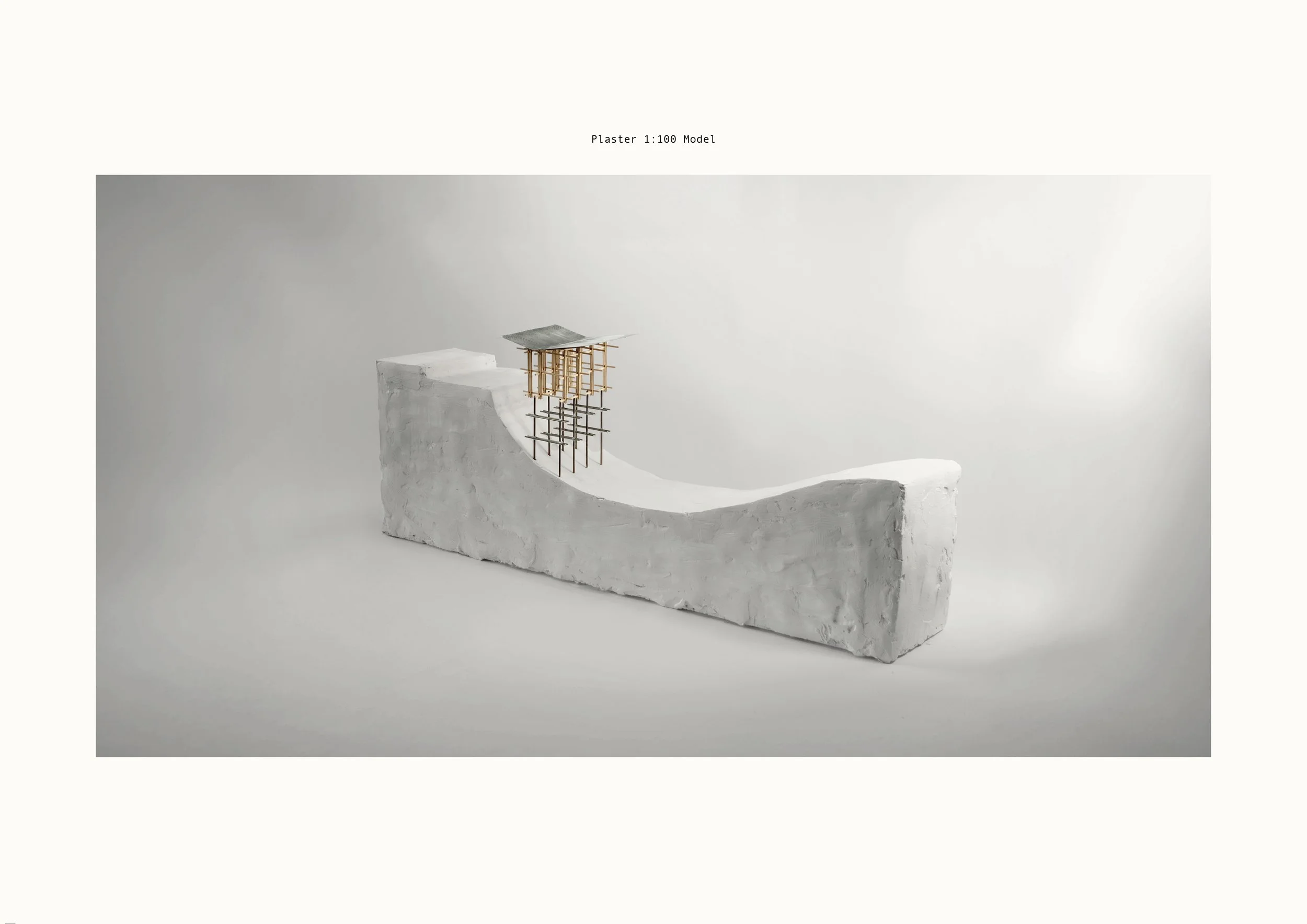
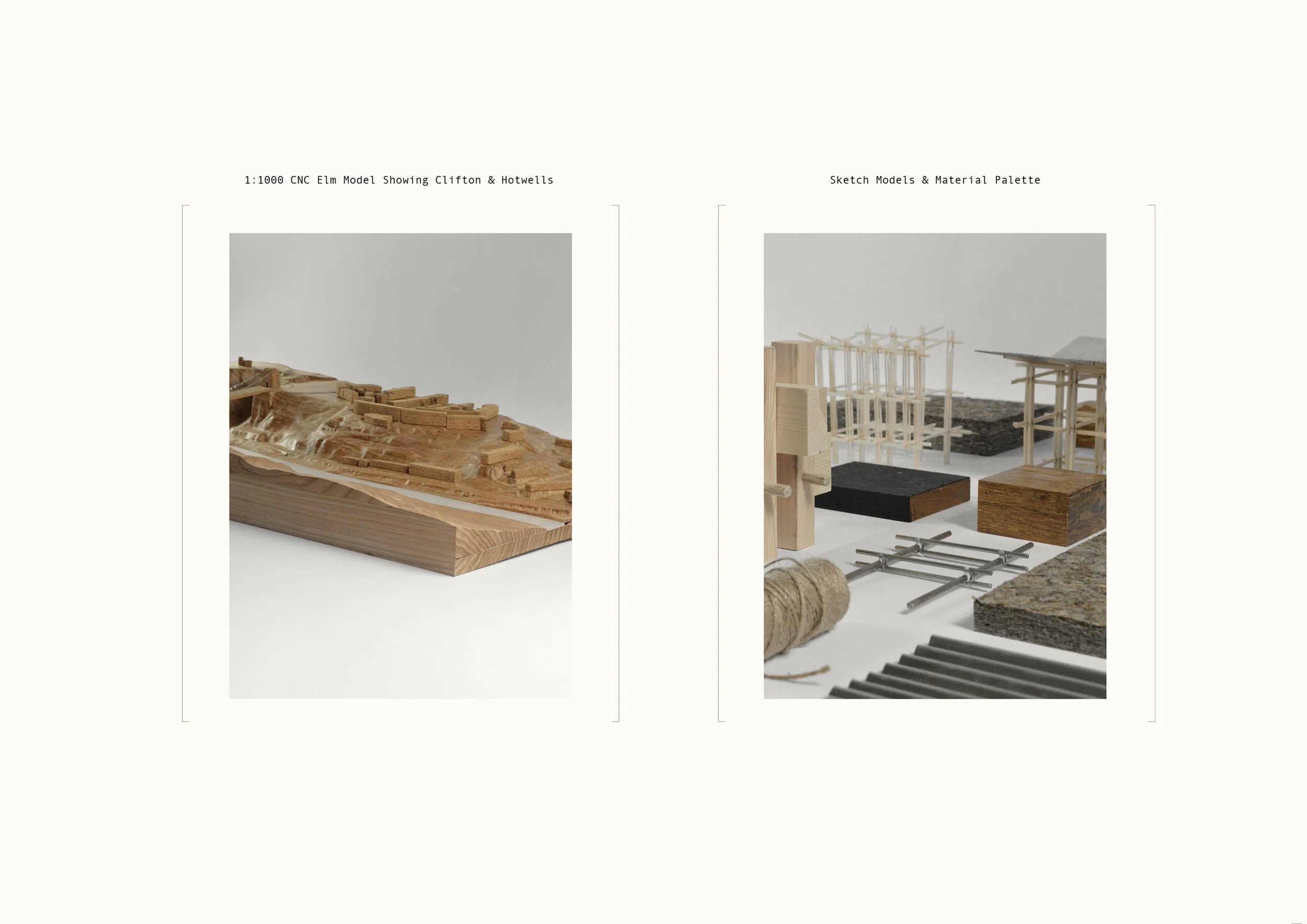
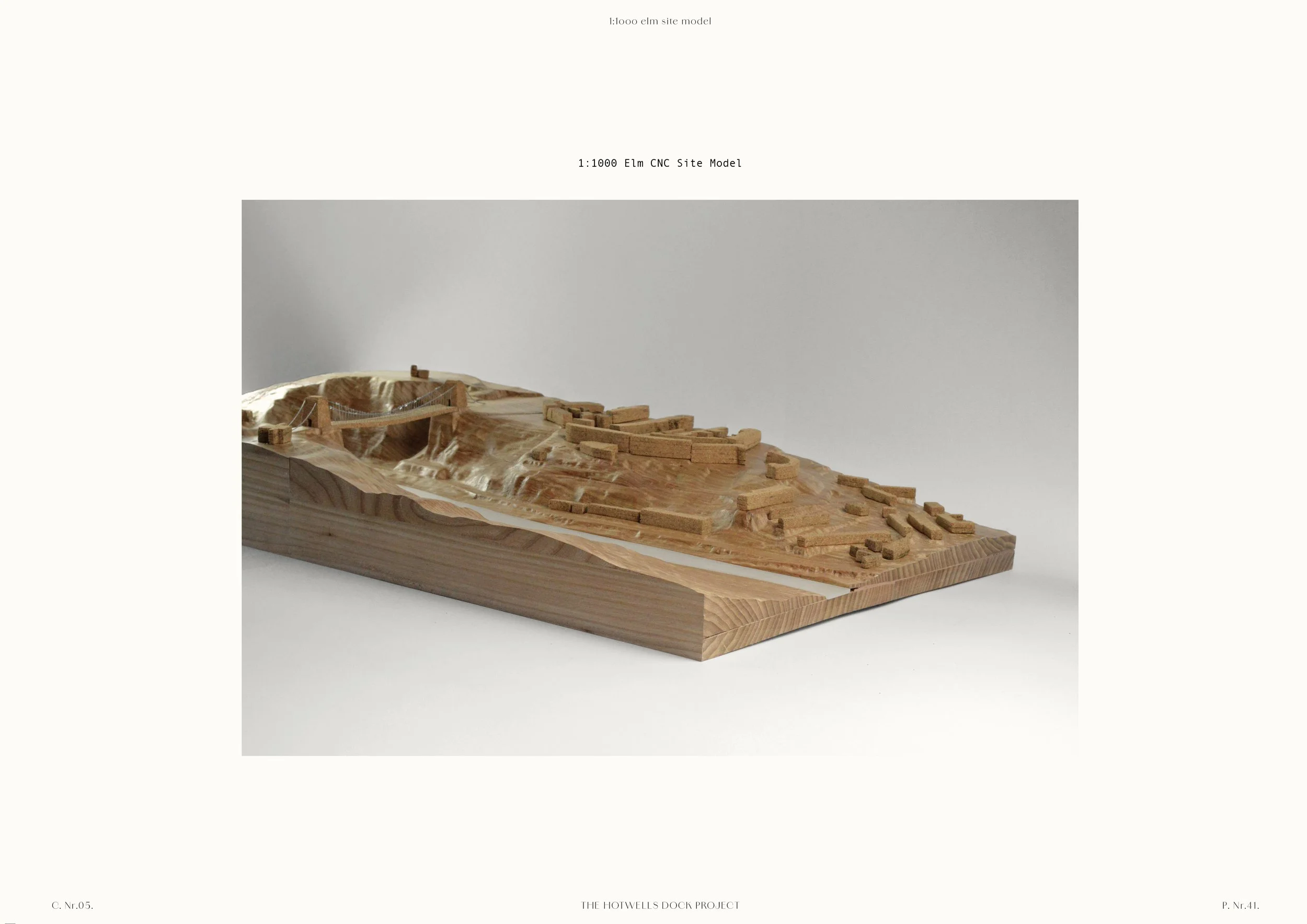
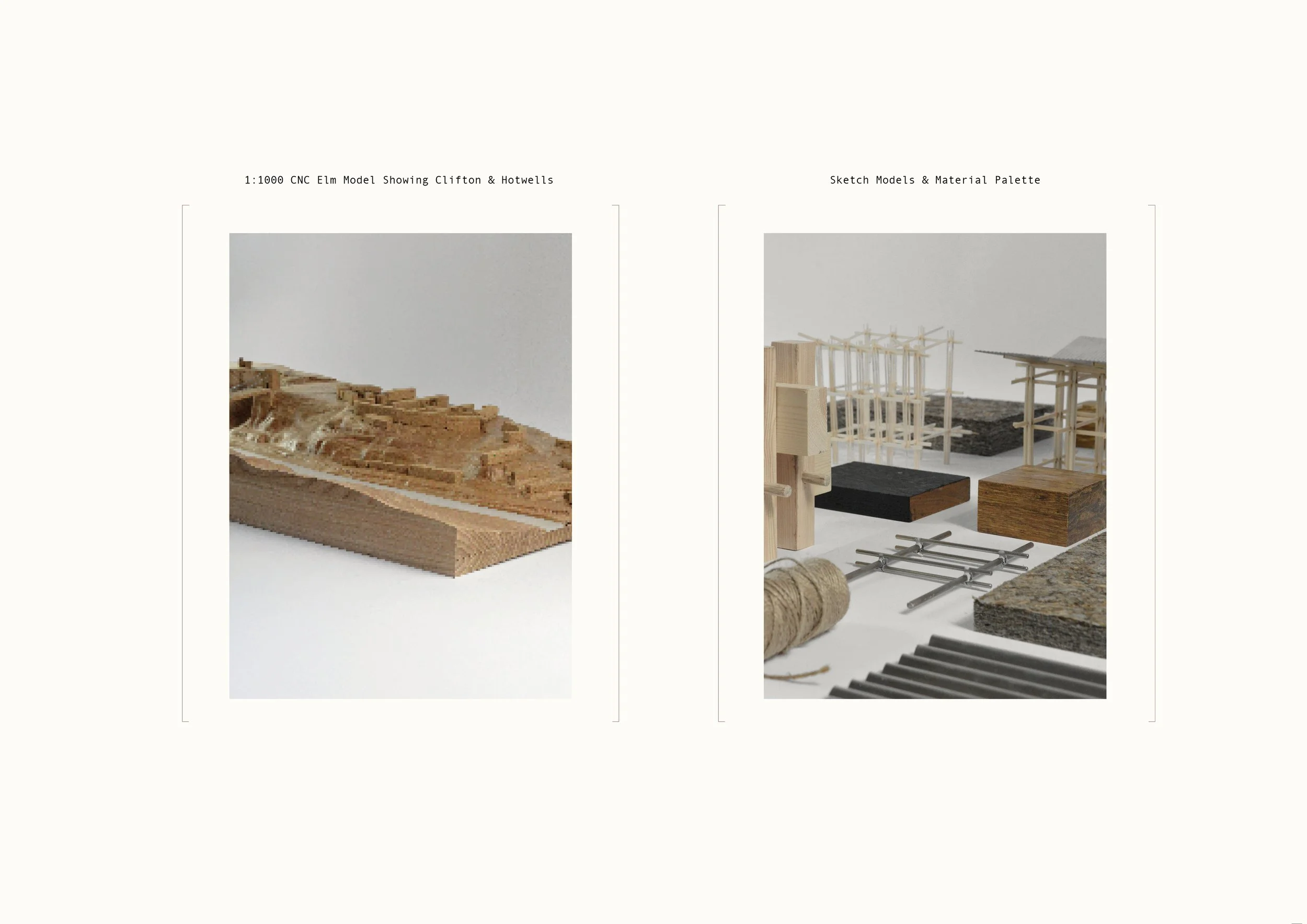
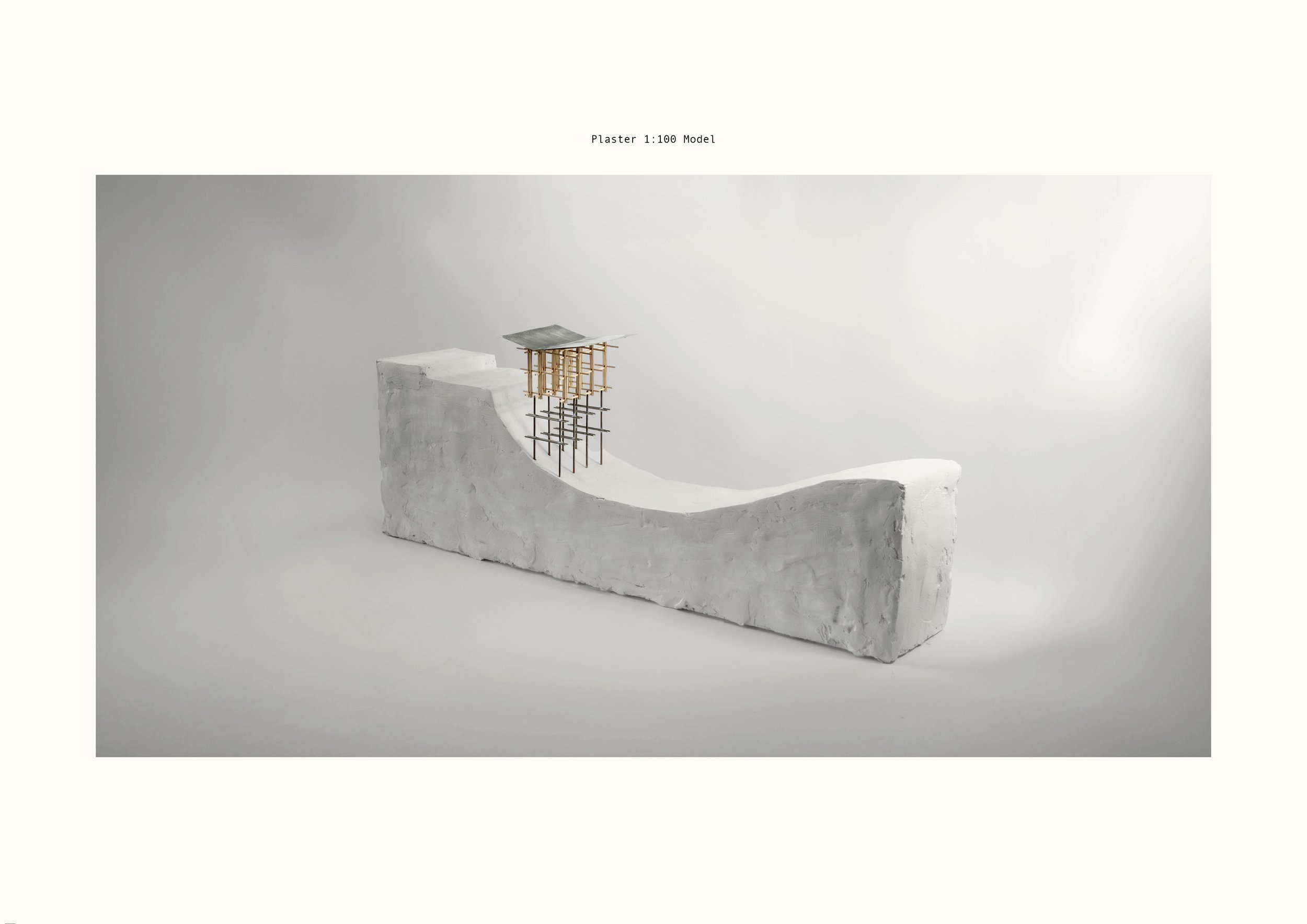
MODELS & MATERIALSModels played an integral part of the projects formation from the very beginning. Early stage massing models with balsa and timber offcuts laid the foundation for studies on form and structure, whilst a 1:1000 CNC milled elm model of the entire site including Clifton and Hotwells came later. Material studies concluded with a raw expression which incorporated a charred timber external structure and more mellowed interiors eelgrass acoustic paneling and carefully considered exposed structural elements create atmospheric but welcoming spaces.
PROCESSModels played an integral part of the projects formation from the very beginning. Early stage massing models with balsa and timber offcuts laid the foundation for studies on form and structure, whilst a 1:1000 CNC milled elm model of the entire site including Clifton and Hotwells came later. Material studies concluded with a raw expression which incorporated a charred timber external structure and more mellowed interiors eelgrass acoustic paneling and carefully considered exposed structural elements create atmospheric but welcoming spaces.